Last Updated: November 1, 2026
Quick Summary
To freshen dog breath naturally, brush your dog’s teeth daily with dog-safe toothpaste, since brushing is the most effective home step against plaque and tartar. Support it with safe dental chews, clean bowls, and breath-friendly foods like parsley, and see a vet if odor persists or changes suddenly.
- Brush daily if possible, or three to four times a week, building up to 30 seconds per side.
- Never use human toothpaste, which contains xylitol and fluoride and is unsafe for dogs.
- Pick chews that dent slightly under a fingernail and skip antlers, hooves, and hard nylon bones.
- Parsley may help neutralize odor compounds but does not remove plaque or tartar.
- Contact a vet within 24 hours for sudden severe breath change or ammonia-like breath.
Table of Contents
- Start With the Causes of Bad Breath in Dogs
- Learn How to Brush a Dog’s Teeth the Right Way
- Pick Dog Dental Chews for Bad Breath That Are Actually Safe
- Use Breath-Friendly Treats and Foods Like Parsley
- Add Rinses, Gels, and Water Additives Without Overdoing It
- Know When to See a Vet for Bad Dog Breath
- Build a Daily and Weekly Routine That Freshens Dog Breath
- Stock Up on Breath-Friendly Treats From The Dog Emporium
- Frequently Asked Questions
Start With the Causes of Bad Breath in Dogs
Bad breath in dogs is usually a sign of bacteria buildup in the mouth, not just a passing smell. Many owners look for natural ways to freshen dog breath without masking the problem. The fix starts with knowing what’s causing the odor.
Most dog breath problems trace back to the mouth. But not all of them do. Here’s how to tell the difference.
Plaque, Tartar, and Oral Bacteria
Plaque is a soft, sticky film of food and bacteria that forms on teeth within hours of eating. Tartar is what happens when plaque hardens. It traps more bacteria and irritates the gums.
That bacteria releases sulfur compounds. Those compounds are the smell.
Daily tooth brushing breaks up plaque before it hardens. Once tartar forms, only a professional cleaning removes it. This is why brushing matters more than any single treat or spray.
Diet, Bowls, and Non-Dental Causes
Food and dirty bowls can both sour a dog’s breath. Kibble that sits in a slimy bowl picks up bacteria fast. Wash food and water bowls daily with hot water and soap.
Some causes sit outside the mouth entirely:
- Kidney disease can cause breath that smells like ammonia
- Diabetes can produce a sweet or fruity odor
- Gut problems and certain diets can change breath too
If your dog’s breath changed suddenly, or smells unusual rather than just “doggy,” get a vet check. Natural fixes won’t touch a medical cause.
Learn How to Brush a Dog’s Teeth the Right Way
Brushing is the single most effective step for freshening dog breath at home. The American Veterinary Medical Association’s dental care guidance recommends daily brushing as the foundation of home oral hygiene.
Most owners quit because they rush it. Here’s a slower approach that works.
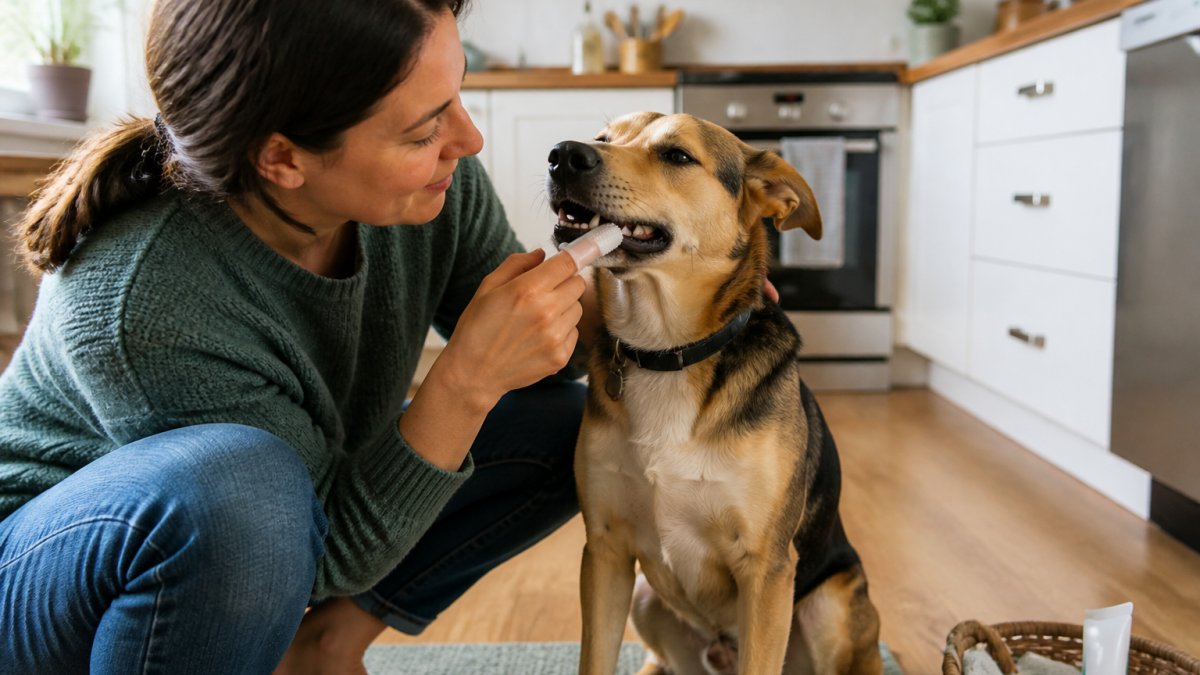
- Start with your finger. Let your dog lick a dab of dog-safe toothpaste off your finger. Do this for a few days.
- Touch the teeth. Rub the paste along the outer teeth and gums for 10 seconds. Praise and stop.
- Switch to a soft brush. Use a dog toothbrush or finger brush. Work along the gum line in small circles.
- Build up to 30 seconds per side. Focus on the outer surfaces, where plaque builds fastest.
- Brush daily if you can. Three to four times a week still helps a lot.
Skip human toothpaste. It contains xylitol and fluoride, which are unsafe for dogs.
Pick Dog Dental Chews for Bad Breath That Are Actually Safe
Dental chews help scrape plaque off teeth, but not all chews are safe. The FDA’s guidance on safe dog chews warns that hard chews can fracture teeth, especially in seniors and small breeds.
Choose chews by texture, not by marketing claims:
- Pick chews with a give. They should dent slightly under a fingernail.
- Match the size to your dog. Too small means a choking risk. Too large means poor cleaning.
- Skip antlers, hooves, and hard nylon bones. These are linked to broken teeth.
- Supervise every chew session. Take the chew away when it gets small enough to swallow.
For dogs with worn or missing teeth, soft options work better than chews. Our guide to soft treats for dogs with teeth issues covers texture, calories, and safety for seniors and dogs recovering from extractions.
Also read the label before you buy. Our breakdown of harmful dog treat ingredients shows what to avoid.
Use Breath-Friendly Treats and Foods Like Parsley
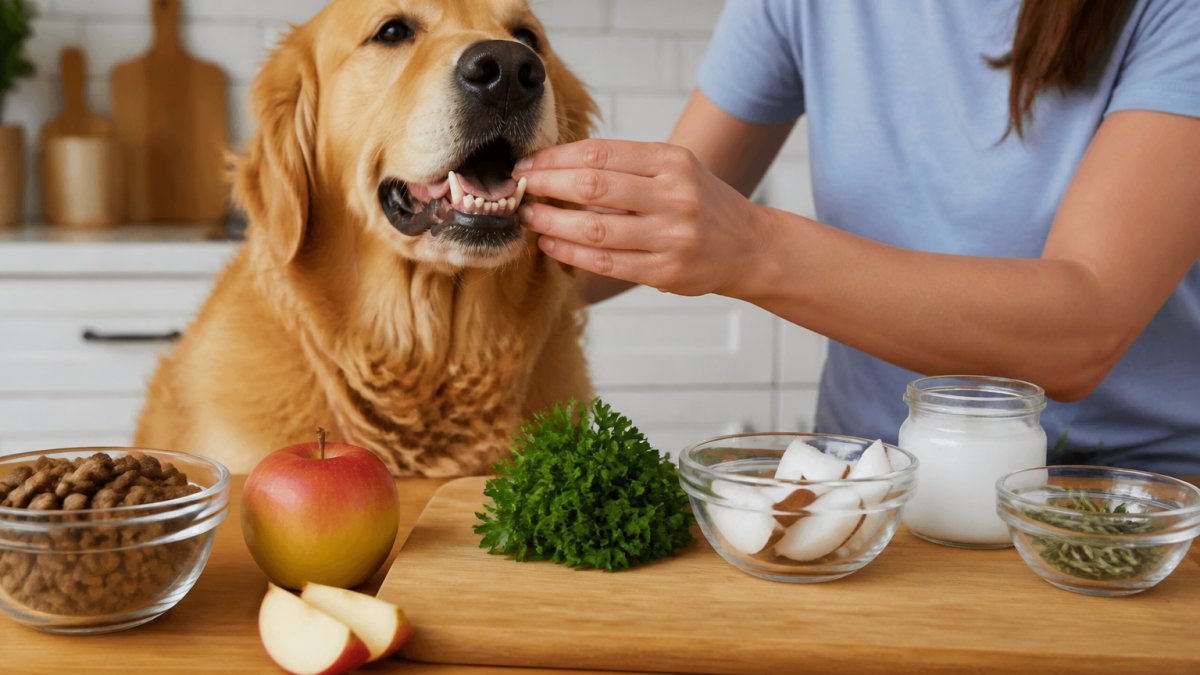
Parsley is a commonly used breath-freshening ingredient. Chlorophyll, the compound most often cited for odor control, may help neutralize odor compounds in the mouth, but it does not remove plaque or tartar, so parsley is a breath-freshener rather than a dental treatment.
The same distinction applies to other foods owners try:
- Carrots and celery. Crunchy, low-calorie vegetables. Cut carrots into dog-appropriate sizes, since whole carrots can be a choking hazard for small dogs.
- Mint. A leaf or two of fresh mint is generally safe, but never use mint essential oil. Essential oils are concentrated and can be toxic to dogs, especially tea tree, peppermint in high doses, and wintergreen.
All-Natural Sweet Potato Dog Treats for Fresh Breath and Happy Tummies (5 oz) →
How to tell if a food remedy is working: pick one addition at a time, give it for two to three weeks, and assess your dog’s breath at the same time each week. If the odor is unchanged or worsens, the cause is likely plaque, tartar, or a medical issue that food will not fix. A common pattern is that owners see mild improvement from parsley or crunchy vegetables but still need daily brushing and professional cleaning to make a real difference.
Treats can do double duty here. Our all-natural sweet potato dog treats for fresh breath and happy tummies are baked with parsley and cinnamon in small batches, with a limited-ingredient recipe that skips wheat, corn, soy, beef, and chicken.

Add Rinses, Gels, and Water Additives Without Overdoing It
Oral rinses, gels, and water additives are sometimes used between brushings. They’re a backup, not a replacement for brushing.
A few rules keep them safe:
- Buy pet-specific products. Human mouthwash is not safe for dogs.
- Introduce one product at a time. Give it a week before adding another.
- Follow the label dose. More is not better, and some additives lose potency in a full water bowl.
- Watch for stomach upset. Stop if you see drooling, vomiting, or loose stools.
If you’re adding new treats or additives to a sensitive dog’s diet, our guide on how to transition dog to new treats safely walks through a step-by-step schedule and the sensitivity signs to watch for.
Know When to See a Vet for Bad Dog Breath
Most doggy breath improves with home care, but some breath changes are a medical red flag. The key is to separate cosmetic odor from a sign of disease, and to know how urgently to act.
Contact a veterinarian promptly, same day or within 24 hours, if you notice:
- Sudden, severe breath change. A dog that had normal breath yesterday and now has overwhelming odor may have an oral infection, a foreign object lodged in the mouth, or a systemic issue.
- Ammonia-like breath. This can be associated with kidney disease and warrants a vet visit rather than home remedies.
- Sweet or fruity breath. This can be a sign of diabetes, especially if paired with increased thirst and urination.
- Drooling, pawing at the mouth, dropping food, or reluctance to chew. These suggest pain, a broken tooth, or a foreign body.
- Gums that bleed easily, loose teeth, or visible swelling. These point to periodontal disease or infection.
- Weight loss, reduced appetite, or vomiting alongside bad breath. These are systemic signs that need evaluation.
Book a routine exam within a few weeks if:
- Bad breath persists after two to three weeks of consistent daily brushing and safe chews.
- You see heavy tartar buildup, especially along the gum line.
- Your dog is a senior or small breed with known dental disease.
- Your dog has worn or missing teeth and chews are no longer suitable.
A veterinary dental exam can catch problems you cannot see at home. Your veterinarian can advise how often your dog should have a dental exam.
Home care is not a substitute for veterinary care when a red flag is present. If you are unsure, call your vet’s office and describe the breath change, most clinics will tell you whether to come in now or monitor at home.
Build a Daily and Weekly Routine That Freshens Dog Breath
Consistency beats intensity. A simple routine, done most days, works better than an occasional deep clean.
Task | Frequency | Time Needed |
|---|---|---|
Brush teeth | Daily, or 3-4x weekly | 1-2 minutes |
Wash food and water bowls | Daily | 2 minutes |
Dental chew or breath-friendly treat | Daily | 5-10 minutes |
Check mouth for redness or broken teeth | Weekly | 1 minute |
Oral rinse or gel | 2-3x weekly | 1 minute |
Vet dental exam | Yearly, or as advised | Appointment |
Adjust for your dog. Seniors and small breeds may need softer textures. Puppies need gentler handling. Big dogs with heavy tartar may need a vet cleaning first.
To check if your routine is working, smell your dog’s breath at the same time each week. Note any gum redness. Ask your vet at the next visit.
Stock Up on Breath-Friendly Treats From The Dog Emporium
Freshening dog breath at home comes down to daily brushing, safe chews, clean bowls, and treats that support oral hygiene. Small, consistent steps add up.
At The Dog Emporium, we bake our treats in small batches with simple, all-natural ingredients.
Ready to make treat time work harder for your dog’s breath? Browse the full range of breath-friendly treats and find a flavor your dog will run for.
Frequently Asked Questions
What are the signs of dental disease in dogs?
Watch for persistent bad breath, yellow-brown tartar along the gumline, red or swollen gums, drooling, dropping food while eating, chewing on one side, and pawing at the mouth. Some dogs with advanced dental disease eat less or lose weight. Any of these signs means it is time for a veterinary dental exam, not just a home remedy. Brushing and dental chews help prevent problems, but they cannot reverse tartar that has already hardened or treat an infected tooth.
Can dental chews really help with bad breath in dogs?
Yes, when they are the right type and you supervise use. Chewing stimulates saliva, which helps rinse oral bacteria, and the abrasive texture can reduce plaque before it hardens into tartar. Choose a chew sized to your dog, avoid cooked bones and hard antlers that can crack teeth, and never leave a chewing dog unattended. Dental chews support brushing, they do not replace it. Pair chews with daily tooth brushing for the biggest effect on dog breath.
Can I use human mouthwash on my dog?
No. Human mouthwash often contains alcohol, xylitol, or fluoride in amounts that are unsafe for dogs, and swallowing it can cause vomiting or worse. Use only pet-labeled oral rinses or gels, and follow the directions on the bottle. Even dog-safe rinses work best as a supplement to brushing, not a substitute. If your dog’s breath stays bad despite a routine, ask your vet before adding new products.
How often should I brush my dog’s teeth?
Daily is ideal, and most veterinary dentists recommend brushing at least several times a week to keep plaque from hardening into tartar. Plaque starts mineralizing within about 24 to 48 hours, so consistency matters more than duration. A 30-second brush along the outer surfaces of the teeth, using dog-safe toothpaste, does real work. Start slow with a finger brush and reward calm behavior so the habit sticks.
Your dog’s breath won’t fix itself overnight, and that’s fine. Start with brushing, add a safe chew, and keep the bowls clean. If you want a treat that pulls its weight, The Dog Emporium’s small-batch, parsley-baked bites make daily breath care easy, with limited ingredients for sensitive tummies and a crunch that doubles as a reward. Get started with The Dog Emporium and give your dog fresher breath and a happier tummy.

Leave a Reply