Last Updated: October 23, 2026
Quick Summary
Soft treats for dogs with teeth issues should pass the thumb test: press one between your thumb and index finger, and if it gives with light pressure and leaves an indent, it is soft enough for most dogs with mild to moderate dental issues. Texture is the only reliable signal, since terms like soft-baked and tender are not regulated.
- Run four at-home checks before buying: thumb test, snap test, soak test, and crumb test.
- Wait until your vet clears your dog before offering any treat after tooth extraction.
- Treats should make up no more than about 10 percent of a dog’s daily calories.
- Soft dental chews can reduce surface plaque but cannot replace brushing or professional cleaning.
- Soak treats in warm water for 5 to 10 minutes and serve immediately, never microwaving them.
Table of Contents
- Why Soft Treats for Dogs With Teeth Issues Matter
- How to Tell if a Treat Is Actually Soft Enough
- Soft Treats for Dogs With No Teeth
- Dog Treats After Tooth Extraction: Safety First
- Soft Dog Treats for Senior Dogs
- Soft Dental Chews for Dogs: What They Can and Can’t Do
- How to Soften Treats Safely at Home
- Conclusion
- Frequently Asked Questions
Why Soft Treats for Dogs With Teeth Issues Matter
Soft treats for dogs with teeth issues let a dog with damaged, missing, or painful teeth enjoy snack time without chewing strain.
Dental disease is one of the most common health problems vets diagnose in adult dogs, and the American Veterinary Medical Association’s dental care guidance notes that by age three, most dogs show some sign of periodontal disease.
Soft treats also make it easier to deliver medication, reward a nervous dog, or keep an older pup engaged in training.
What most guides get wrong is treating “soft” as one category. A treat can be soft-baked and still too firm for a dog with advanced dental disease.
How to Tell if a Treat Is Actually Soft Enough
The fastest test is the thumb test: press a treat between your thumb and index finger. If it gives with light pressure and leaves an indent, it is soft enough for most dogs with mild to moderate dental issues.
Manufacturers use words like “soft-baked,” “tender,” and “easy to chew” loosely, and none are regulated. Texture is the only reliable signal.
The Squish Test and Other At-Home Checks
Run these four checks before you commit a whole bag to a dog with bad teeth:
- Thumb test. Light pressure should dent the treat, not crack it.
- Snap test. Break it in half. A soft treat tears; a hard one snaps cleanly.
- Soak test. Drop one in warm water for two minutes. If it stays rock-hard, it will stay rock-hard in your dog’s mouth.
- Crumb test. Rub it between your fingers. Soft treats shed crumbs; hard ones stay intact.
A common mistake is judging softness from the outside of the bag. Treats dry out after opening, so a bag that felt soft on day one can turn brittle by week three. Keep the seal tight and re-test before each serving.
Soft Treats for Dogs With No Teeth
Dogs with no teeth can still eat soft treats, provided the texture is soft enough to gum rather than chew. The goal shifts from chewing to licking, gumming, and swallowing comfortably.
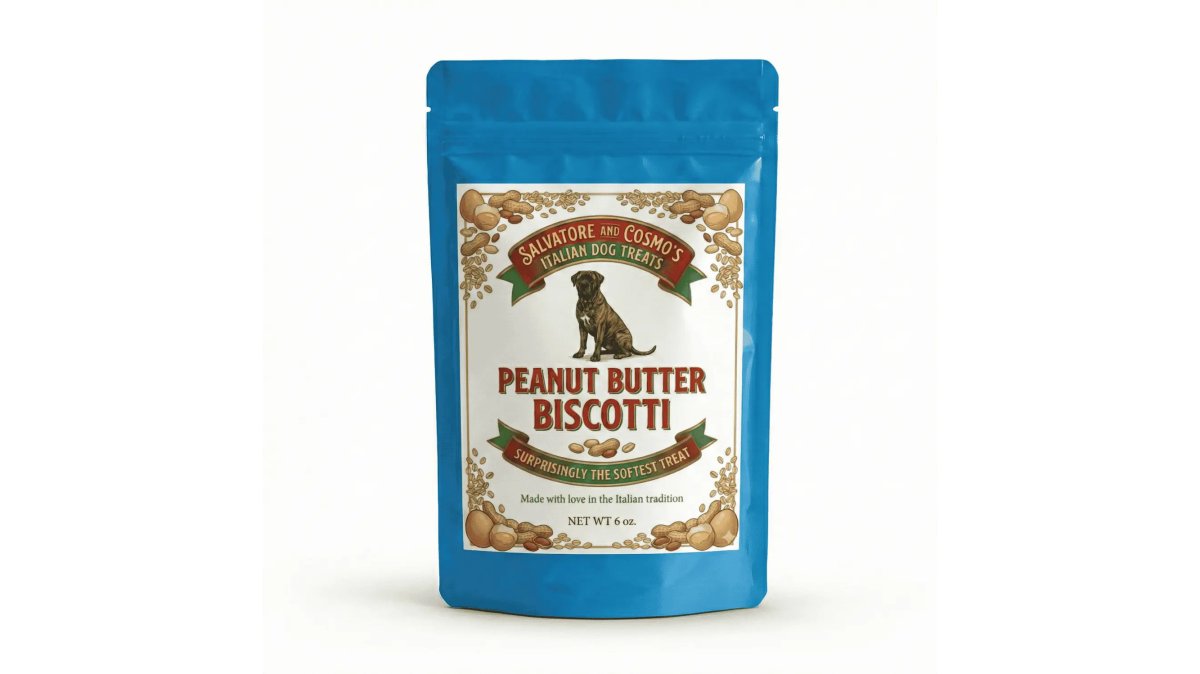
For a toothless dog, look for treats that crumble or dissolve under gentle pressure. Our Soft Peanut Butter Biscotti Dog Treats are built for exactly this: a soft, easy-to-chew texture that even toothless seniors can happily gum, in a limited-ingredient recipe with no wheat, beef, corn, soy, or chicken.

Size matters as much as texture. A large soft treat still requires handling, so break it into bite-sized pieces for small breeds and dogs who gulp. A dog with no teeth may try to swallow a whole piece, so keep portions small and supervise the first few servings.
Dog Treats After Tooth Extraction: Safety First
Wait until your vet clears your dog before offering any treat after tooth extraction. Most vets restrict all food except soft or moistened meals for the first 24 to 72 hours, and some extend that window after surgical extractions.
A crumb lodged in an extraction site can dislodge a clot and cause a painful condition called dry socket, and hard or crumbly treats can irritate sutures.
Follow this sequence:
- Days 0-3: No treats unless your vet approves. Offer softened food only.
- Days 3-7: Introduce very soft treats in tiny pieces, one at a time.
- Week 2 onward: Gradually return to normal soft treats if healing looks good.
Ask your vet for a written timeline. A dog with severe dental disease or multiple extractions needs a longer window than one who lost a single incisor.
Soft Dog Treats for Senior Dogs
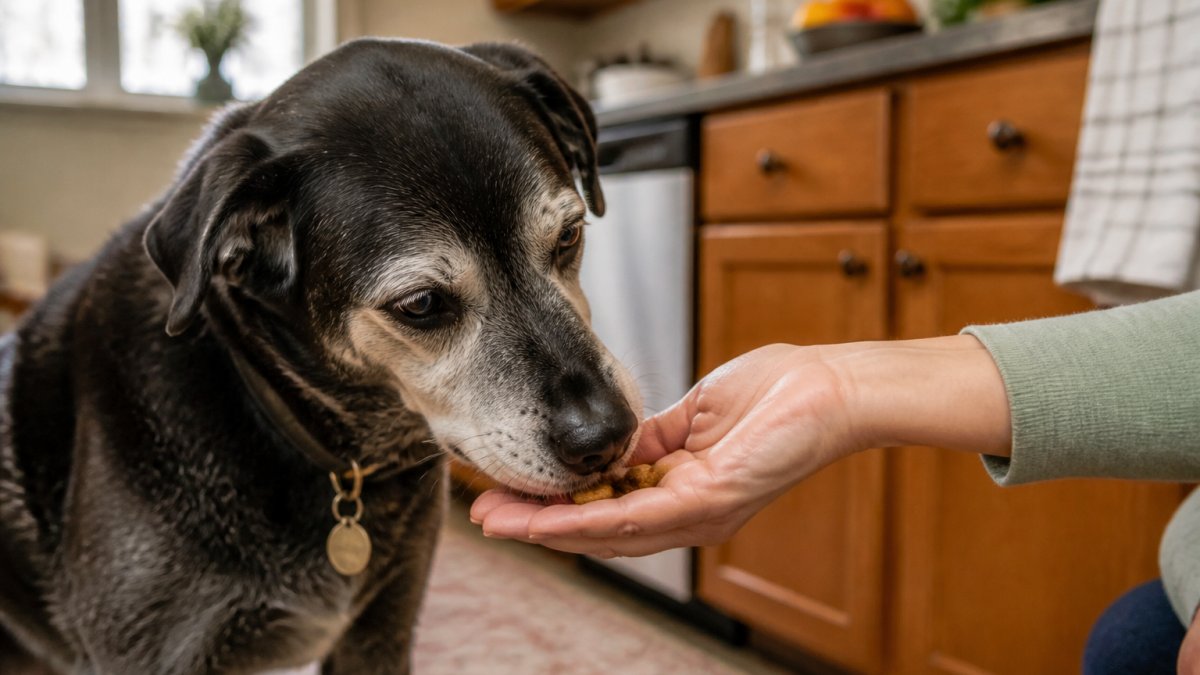
Senior dogs benefit most from soft treats because aging brings worn enamel, receding gums, and weaker jaw strength. But “senior” is not one profile, and the right treat depends on which age-related changes your dog actually has.
Match the Treat to the Senior Problem
Senior dental issues fall into a few patterns, each calling for a different treat choice:
- Worn enamel or exposed dentin. The tooth surface is sensitive to pressure and temperature. Look for treats that crumble under light thumb pressure and avoid anything with a hard baked crust.
- Receding gums and loose teeth. The concern is mobility, not just hardness. Choose small, gummable pieces and skip anything the dog has to tear or hold with the front teeth.
- Missing teeth or a full-mouth extraction. The goal shifts to licking and gumming. Crumble soft treats over wet food rather than offering a whole piece.
Calorie and Portion Math for Less Active Dogs
Older, less active dogs gain weight easily, so smaller and fewer treats matter. Treats should make up no more than about 10 percent of a dog’s daily calories, a small budget for a sedentary senior (Creating A Nutritional Plan).
Do the math before you buy. If your senior eats a 350-calorie-per-day maintenance diet, the treat budget is roughly 35 calories. A soft treat at 15 calories each means two treats, not a handful.
Check the label for calories per treat, not just per bag, and weigh your dog monthly.
Soft Peanut Butter Biscotti Dog Treats – All‑Natural, USA‑Made, Puppy to Senior →
Ingredients and Senior Digestion
Limited-ingredient recipes are gentler on sensitive stomachs, and senior dogs often digest less well than they did at two. Three label checks matter most:
- Protein source and quality. Senior dogs still need quality protein to maintain muscle, so look for a named meat or egg near the top of the ingredient list.
- Fiber and fat. Very high-fat treats can upset a senior’s stomach or pancreas; very high-fiber treats can help regularity but may bloat a dog with a sensitive gut.
- Additives. Artificial colors and preservatives add nothing a senior needs. Simple is easier to troubleshoot if a stomach upset appears.

Soft Dental Chews for Dogs: What They Can and Can’t Do
Soft dental chews can help reduce plaque on the chewing surfaces of teeth, but they are not a substitute for brushing or professional cleaning. Treat marketing often blurs that distinction, and for a dog with teeth issues, choosing the wrong category can turn a comfort product into a source of pain.
Two Different Jobs: Comfort vs. Cleaning
A soft dental chew works by flexing and abrasion: the texture rubs against tooth surfaces as the dog chews, disrupting early plaque. It cannot reach below the gumline, where periodontal disease actually starts.
The mistake is expecting one product to do both. If your dog has significant dental disease, the priority is comfort and safety, not plaque reduction. If your dog has healthy teeth and you want maintenance, a dental chew with evidence behind it makes sense.
Here is the honest split:
Goal | Soft dental chews help? | What actually works |
|---|---|---|
Reduce surface plaque | Somewhat | Brushing, dental chews |
Remove tartar buildup | Minimal | Veterinary scaling |
Freshen breath | Temporary | Brushing, dental treats, vet check |
Comfort for sore teeth | Yes | Soft, low-abrasion treats |
Replace professional cleaning | No | Annual vet dental exam |
When a Dental Chew Is the Wrong Choice
A dog with loose teeth, advanced gum disease, or a recent extraction may need comfort-focused soft treats instead of dental chews. The mechanical action that makes a dental chew useful can also irritate inflamed gums or dislodge a weakened tooth.
Ask your vet whether any chew is appropriate if your dog has:
- Loose or mobile teeth
- Bleeding gums when eating or chewing
- A recent extraction or oral surgery
If any of those apply, treat the dental chew aisle as off-limits until your vet says otherwise, and lean on comfort-focused soft treats in the meantime.
How We Evaluate a Dental Chew Claim
Treat packaging uses “dental” loosely. A transparent selection method cuts through it:
- Look for the Veterinary Oral Health Council seal. The seal means the product met a defined standard for plaque or tartar reduction (About the VOHC).
- Check the texture claim against the thumb test. A chew marketed as soft should dent under light thumb pressure. If it cracks, it is not a soft chew regardless of the label.
- Size it to the dog. A chew should be large enough that the dog cannot swallow it whole but small enough to chew comfortably. Match the package size chart to your dog’s weight, not to its breed name.
- Read the calorie line. Dental chews are treats, not free food. They count against the 10 percent treat budget.
- Supervise the first few servings. Watch for gulping, gagging, or dropping the chew, signs it is too hard, too small, or too large.
The Comfort-First Alternative
For dogs who cannot safely chew a dental product, comfort-focused soft treats are the correct choice. They keep snack time positive, make medication easier, and preserve the human-animal bond while the dog is sore or healing. Pair them with brushing if your vet approves, and schedule a professional dental exam for the cleaning treats cannot do.
How to Soften Treats Safely at Home
You can soften many treats without ruining them, but the method matters. The goal is to add moisture without creating a food-safety problem.
Safe methods:
- Warm water soak. Drop treats in warm (not hot) water for 5 to 10 minutes, then serve immediately. Do not leave soaked treats sitting out.
- Bone broth. Soak in low-sodium, onion-free bone broth for extra aroma and appeal.
- Crumble over food. Break treats into small pieces and mix into wet food for dogs who cannot handle solid pieces.
Avoid microwaving treats, which can create hard spots. Skip soaking in milk or sugary liquids. And never leave a soaked treat in the bowl for hours, because moist food spoils fast.
A common mistake is soaking a whole bag at once. Soften only what your dog will eat in one sitting.
Conclusion
The hardest part of buying soft treats for a dog with dental issues is cutting through the label language. Texture, size, and ingredients decide whether a treat helps or hurts, and none of that is obvious from the front of the bag.
At The Dog Emporium, we bake in small batches with limited, all-natural ingredients, and our soft-baked biscotti and breakable treats are made to work for seniors, small breeds, and dogs with sensitive teeth.
Frequently Asked Questions
What kind of treats can I give a dog with no teeth?
Dogs with no teeth can still enjoy soft, breakable treats. Look for soft-baked biscuits, soft chews, or treats you can crumble into small pieces. The soft peanut butter biscotti from The Dog Emporium ($15.00 for a 6 oz bag) are baked soft enough for toothless seniors to gum, and they break apart easily. Avoid hard biscuits, chew sticks, and dental rings, which can cause gum irritation or become a choking risk for a dog with no teeth.
What soft treats can I give my dog after tooth extraction?
Wait until your vet clears your dog for treats, usually 24 to 48 hours after surgery. Then choose very soft, plain treats with no hard edges. Break treats into pea-sized pieces and offer them one at a time. Avoid anything crunchy, sticky, or crumbly that could lodge in the extraction site. Soft-baked treats or crumbled treats over wet food work well. Watch for bleeding or discomfort and call your vet if either appears.
Can dogs with dental issues eat dental chews?
Most dental chews are too hard for dogs with bad teeth, missing teeth, or sensitive gums. A soft dental chew may help with light plaque buildup, but it cannot replace brushing or professional cleanings. If your dog has severe dental disease or recent extractions, skip dental chews entirely until your vet approves them. Comfort-focused soft treats are the safer choice while the mouth heals.
How do I make dog treats softer for a dog with dental problems?
You can soften many treats at home. Break a treat into small pieces and soak them in warm water or low-sodium bone broth for a few minutes until they soften. You can also crumble soft-baked treats over wet food. Never microwave hard treats, since uneven heating can create hard spots. Check the softened texture with your fingers before offering it to your dog.

Leave a Reply