
Last Updated: October 30, 2026
Quick Summary
The safest soft treats for senior dogs are soft-baked, tender, and breakable by hand, so a dog with worn or missing teeth can chew them without risk. Choose limited-ingredient recipes with a named protein and no xylitol, and keep treats under roughly 10 percent of daily calories.
- Press a treat between thumb and forefinger; if you strain, your senior will too.
- Xylitol is toxic to dogs, so avoid added sugars and sugar alcohols.
- A 20 lb senior gets roughly 340 to 400 calories daily, so 34 to 40 calories of treats.
- Cut soft-baked biscotti and chews into pea-sized pieces to stretch the bag.
- Homemade soft treats spoil faster and are harder to portion evenly than bought ones.
Table of Contents
- Why Soft Treats for Senior Dogs Matter More Than You Think
- Easy-to-Chew Treats for Older Dogs: What Texture Actually Works
- Safe Ingredients in Dog Treats: What to Look For and Avoid
- Our Top Soft Treat Picks for Senior Dogs
- Senior Dog Treat Portion Size: How Much Is Too Much?
- Homemade Soft Dog Treats: When They Work and When to Buy
- Start Shopping for Your Senior Dog’s Next Favorite Treat
- Frequently Asked Questions
Why Soft Treats for Senior Dogs Matter More Than You Think
Senior dogs rarely lose interest in treats. They lose the ability to chew them safely. That gap is where most well-meaning owners run into trouble, and it is exactly why finding safe soft treats for senior dogs matters more than the average trip down the pet aisle suggests.
Here is the core issue: a hard biscuit that a two-year-old labrador inhales can crack a worn tooth or become a choking hazard for an older dog. Soft, breakable treats solve that. But soft alone is not enough.
Easy-to-Chew Treats for Older Dogs: What Texture Actually Works
The best easy-to-chew treats for older dogs are soft-baked, tender, and breakable by hand. Texture is the first filter, because a treat your dog cannot chew safely never gets to deliver any nutritional benefit.
Soft-Baked vs. Crunchy: Matching Texture to Chewing Ability
Match the treat to the mouth, not to the dog’s enthusiasm. A senior with most of her teeth can often handle a light crunch. A dog with extractions, missing molars, or gum sensitivity needs something that gives way under gentle pressure.
- Soft-baked biscotti: bends and snaps easily, ideal for seniors and small pups
- Soft chews: dense but pliable, good for daily supplements
- Crunchy treats: fine for dogs with healthy teeth, risky for worn or missing ones
A simple test: press the treat between your thumb and forefinger. If you have to strain, your senior will too.
Safe Ingredients in Dog Treats: What to Look For and Avoid
Safe ingredients in dog treats come down to a short, recognizable list, an accurate label, and a match to your senior’s medical picture. The harder and more useful skill is reading the label and knowing when a diagnosed condition changes the answer.
Read the label like an editor
Four parts of the panel matter more than the marketing on the front:
- Ingredient list. Ingredients are listed by weight before processing. A named protein or fat in the first few slots is a good sign; “meat meal,” “animal digest,” and split ingredients (e.g., “pea protein, pea fiber, pea starch”) can disguise how much of a filler is really present.
- Guaranteed analysis. This gives minimum protein and fat and maximum fiber and moisture, useful for comparing soft vs. crunchy, but it does not tell you calories.
- Calorie statement. Look for “kcal per treat” or “kcal per kg.” Without it, you cannot portion accurately (see the portion section above).
What to look for
- A named protein or fat source near the top of the list
- No wheat, corn, soy, beef, or chicken if your dog has known sensitivities
- No artificial colors, flavors, or preservatives
What to avoid
- Added sugars and sugar alcohols, especially xylitol, which is toxic to dogs (the FDA)
- Excess salt and mystery “meat meal” blends
- Long ingredient lists your dog has never eaten before
When a medical condition changes the answer
This is where generic advice fails. A treat that is perfect for one senior can be wrong for another:
- Kidney disease. Phosphorus and sodium matter. Many soft chews and jerky-style treats are high in both. Ask your vet before adding any protein-heavy chew.
- Heart disease. Sodium is the lever. Soft-baked biscuits and cheese-based chews are often saltier than owners expect; compare sodium across brands.
- Dental disease or extractions. Texture and piece size decide safety. A dog with missing molars or jaw pain needs a treat that gives way under gentle pressure, press it between thumb and forefinger; if you strain, your senior will too.
Introduce any new treat slowly, one small piece at a time, and watch for digestive upset over the next day. The FDA guidance on pet food ingredients is a useful reference for what belongs in a dog’s diet, and your veterinarian is the right source for individualized restrictions.
Our Top Soft Treat Picks for Senior Dogs
Every pick below is soft-baked or soft-chew, made in small batches, and built around a limited-ingredient approach. Here is how they compare at a glance.
Treat | Price | Texture | Best For |
|---|---|---|---|
Soft Peanut Butter Biscotti | $15.00 | Soft-baked, breakable | Toothless seniors, picky eaters |
Bacon and Egg Dog Treats | $15.00 | Soft, crumbly | Sensitive stomachs, flavor variety |
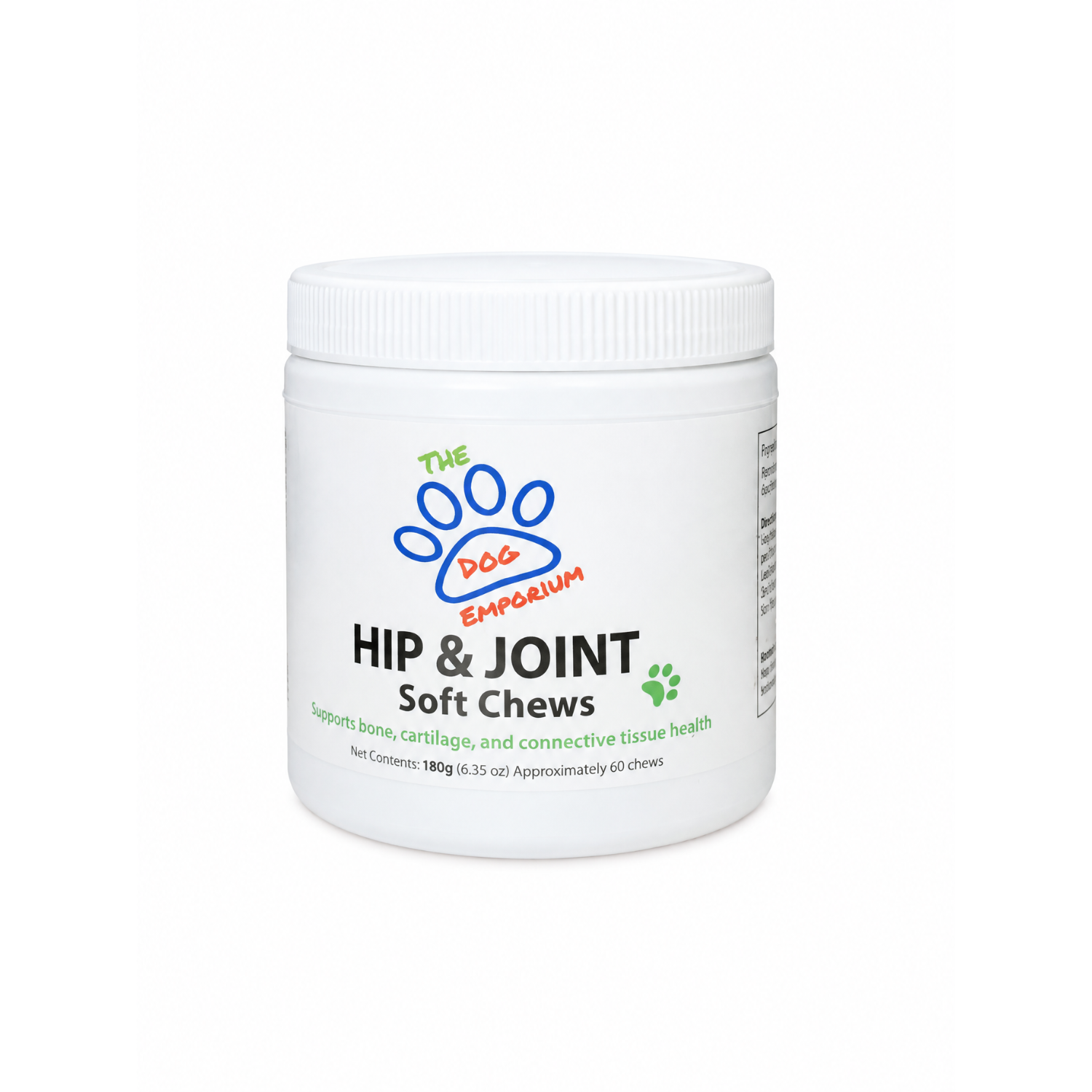
Hip and Joint Soft Chews | $29.00 | Soft chew | Stiff joints, arthritis support |
Pep in the Step Salmon Blueberry Chews | $15.00 | Light crunch | Daily mobility maintenance |

Soft Peanut Butter Biscotti Dog Treats
A soft-baked option for seniors. These soft-baked biscotti are easy to break into smaller pieces, so even a dog with missing teeth can gum them comfortably. The recipe is limited-ingredient with real peanut butter, and contains no wheat, beef, corn, soy, or chicken. At $15.00 for a 6 oz resealable bag, they work for training rewards, nail trims, or everyday spoiling. You can shop the soft peanut butter biscotti to check the full ingredient panel.

Bacon and Egg Dog Treats
For the senior who still gets excited about breakfast, these soft treats deliver real bacon and egg flavor with a gentle, crumbly texture. The limited-ingredient recipe skips wheat, corn, soy, beef, and chicken. They run $15.00 per 5 oz bag, and the label advises 1 to 9 treats per day depending on size, so break them up for smaller seniors. See the bacon and egg dog treats for details.

Hip and Joint Soft Chews
When a senior’s stiffness goes beyond everyday creakiness, these clinical-grade soft chews step up. Each serving of two chews contains the actives listed on the product page. At $29.00, it is the priciest pick here. Review the hip and joint soft chews for the full actives list, or read more on treats for mobility issues if you are weighing options.
Pep in the Step Salmon Blueberry Chews
A lighter, everyday mobility chew for seniors who just need a little help staying comfortable. Salmon oil delivers omega-3s, while collagen, turmeric, and ginger are included in the recipe. At $15.00, they are a daily mobility option.
Soft Peanut Butter Biscotti Dog Treats – All‑Natural, USA‑Made, Puppy to Senior →
Senior Dog Treat Portion Size: How Much Is Too Much?
Senior dog treat portion size should stay under roughly 10 percent of daily calories, a widely used veterinary guideline, but that number is useless until you convert it into actual pieces. Most owners guess, and guessing is how a “few treats” turns into a quarter cup of extra calories a day.
Do the calorie math once
Start with your dog’s daily calorie needs. A common resting-energy formula practitioners use is 30 × body weight in kilograms + 70, then multiplied by an activity factor of about 1.2 for a typical inactive senior and 1.4 for a moderately active one.
Now read the label. If a soft chew is 8 calories, your senior gets four or five pieces. If a soft-baked biscotti is 40 calories, one biscotti is the whole day’s allowance.
A practical serving table
Dog size | Approx. daily calories | 10% treat budget | Pea-sized pieces (≈2 cal each) |
|---|---|---|---|
10 lb | 200-240 | 20-24 cal | 10-12 pieces |
25 lb | 400-480 | 40-48 cal | 20-24 pieces |
50 lb | 700-840 | 70-84 cal | 35-42 pieces |
80 lb | 1,000-1,200 | 100-120 cal | 50-60 pieces |
These are estimates, not prescriptions. Less-active seniors, dogs managing weight, and dogs with metabolic conditions should sit at the low end or below, ask your veterinarian to set the number.
Adjust for the senior reality
Older dogs burn fewer calories and often carry extra weight that strains aging joints, which undercuts the point of a joint-support chew. Three habits keep treats from becoming a problem:
- Break before serving. Cut soft-baked biscotti and chews into pea-sized pieces. A 6 oz bag lasts far longer and the dog gets more reward events for the same calories.
- Bank calories, don’t stack them. On a heavy training or reward day, trim the main meal by roughly the treat calories given. A 40-calorie biscotti is about a tablespoon of most kibble.
- Weigh monthly. A senior gaining a pound or two a month on treats alone is the most common pattern veterinarians see. If the scale creeps, cut the treat budget first, not the protein.
A quick call to your vet settles the right amount for dogs managing weight, kidney disease, heart conditions, or diabetes, conditions where treat calories and ingredients both matter.
Homemade Soft Dog Treats: When They Work and When to Buy
Homemade soft dog treats work well when you control every ingredient and know your dog’s sensitivities. A simple bake of oat flour, plain yogurt, and mashed potato, or cottage cheese and canned food blended into a soft dough, gives you full transparency.
Buying wins when you need guaranteed freshness, tested recipes, and convenience. If your senior has extractions or a diagnosed dental condition, a buying guide for soft treats for dogs with teeth issues helps you compare texture and safety before you commit.
Start Shopping for Your Senior Dog’s Next Favorite Treat
The right soft treat does two jobs at once: it makes your senior’s day and it keeps them safe while they enjoy it. Texture, ingredients, and portion size are the three levers that matter, and every pick above was built with older dogs in mind.
At The Dog Emporium, we bake all-natural, small-batch treats in Pennsylvania with limited ingredients, breakable textures suited to seniors and small pups, and real-food aromas that get tails moving.
Get started with The Dog Emporium and give your senior dog a treat they can actually chew, enjoy, and feel good about.
Frequently Asked Questions
What soft treats are safe for senior dogs?
Look for soft treats for senior dogs with limited, recognizable ingredients and no wheat, corn, soy, beef, or chicken if your dog has sensitivities. Soft-baked biscotti, soft chews, and breakable treats work well for dogs with dental sensitivity. Always check the label for artificial preservatives and introduce any new treat slowly over several days to watch for digestive upset.
Are soft treats better for senior dogs with dental problems?
Yes, for most senior dogs with missing teeth, gum disease, or jaw stiffness, easy-to-chew treats for older dogs are gentler than hard biscuits. Soft textures reduce the risk of pain or broken teeth. However, soft treats do not clean teeth, so continue any dental care your vet recommends. Break larger treats into smaller pieces for dogs with significant dental sensitivity.
How many treats should I give my senior dog each day?
Senior dog treat portion size should stay within 10% of your dog’s daily calories. For most small senior dogs, that means 1 to 3 small treats per day; larger dogs may handle a few more. Always reduce main meal portions slightly on heavy treat days, and choose breakable treats so you can split one into several rewards without overfeeding.
Can senior dogs eat homemade soft dog treats?
Homemade soft dog treats can be safe if you use dog-safe ingredients like plain peanut butter without xylitol, plain yogurt, mashed potato, or canned food. Avoid onions, garlic, grapes, and added salt or sugar. Homemade treats spoil faster than commercial ones, so store them in the refrigerator and use within a few days. Commercial small-batch treats offer more consistent freshness and portion control.
Should I ask my veterinarian before changing my senior dog’s treats?
Yes, especially if your dog has kidney disease, diabetes, pancreatitis, or food allergies. Your vet can confirm safe ingredients in dog treats for your dog’s specific condition and recommend a daily calorie limit. Bring the treat label to your appointment so your vet can review protein, fat, and ingredient sources before you make the switch.

Leave a Reply