Table of Contents
- The Real Reasons Small Batch Dog Treats Cost More
- Small-Batch Dog Treats vs Commercial Dog Treats: A Cost Breakdown
- Why Are Premium Dog Treats So Expensive? Inside the Production Costs
- Ingredient Quality and Sourcing: Where Your Money Actually Goes
- How to Compare Dog Treat Prices Per Ounce
- When the Premium Is Worth It (And When It Isn’t)
- How to Store Natural Dog Treats to Maximize Freshness and Value
- Conclusion
- Frequently Asked Questions
Last Updated: October 20, 2026
The Real Reasons Small Batch Dog Treats Cost More
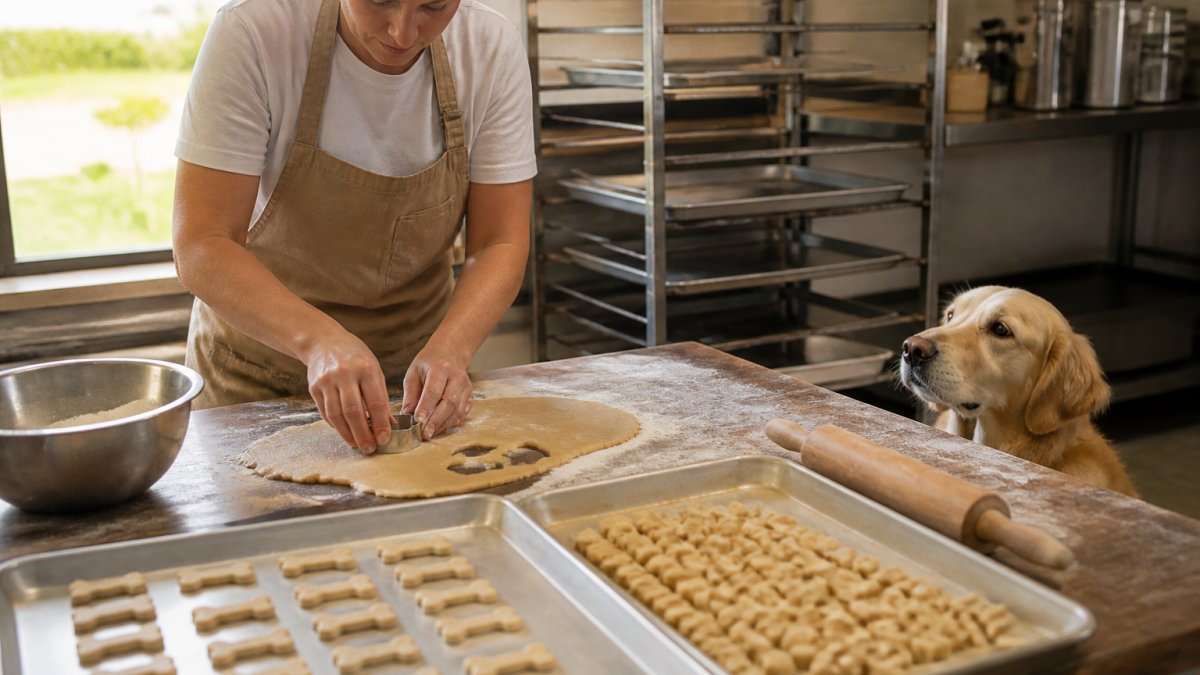
Small batch dog treats cost more because every step that makes them safer and fresher resists economies of scale. Short production runs, hand work, careful sourcing, and frequent quality checks all add cost per batch. At The Dog Emporium, we bake in small batches in Donora Pennsylvania, so we see those costs up close.
The short answer: small batch dog treats cost more because you’re paying for attention, not volume. A factory spreads one setup across thousands of pounds of product. A small bakery spreads the same setup across a two dozen bags.
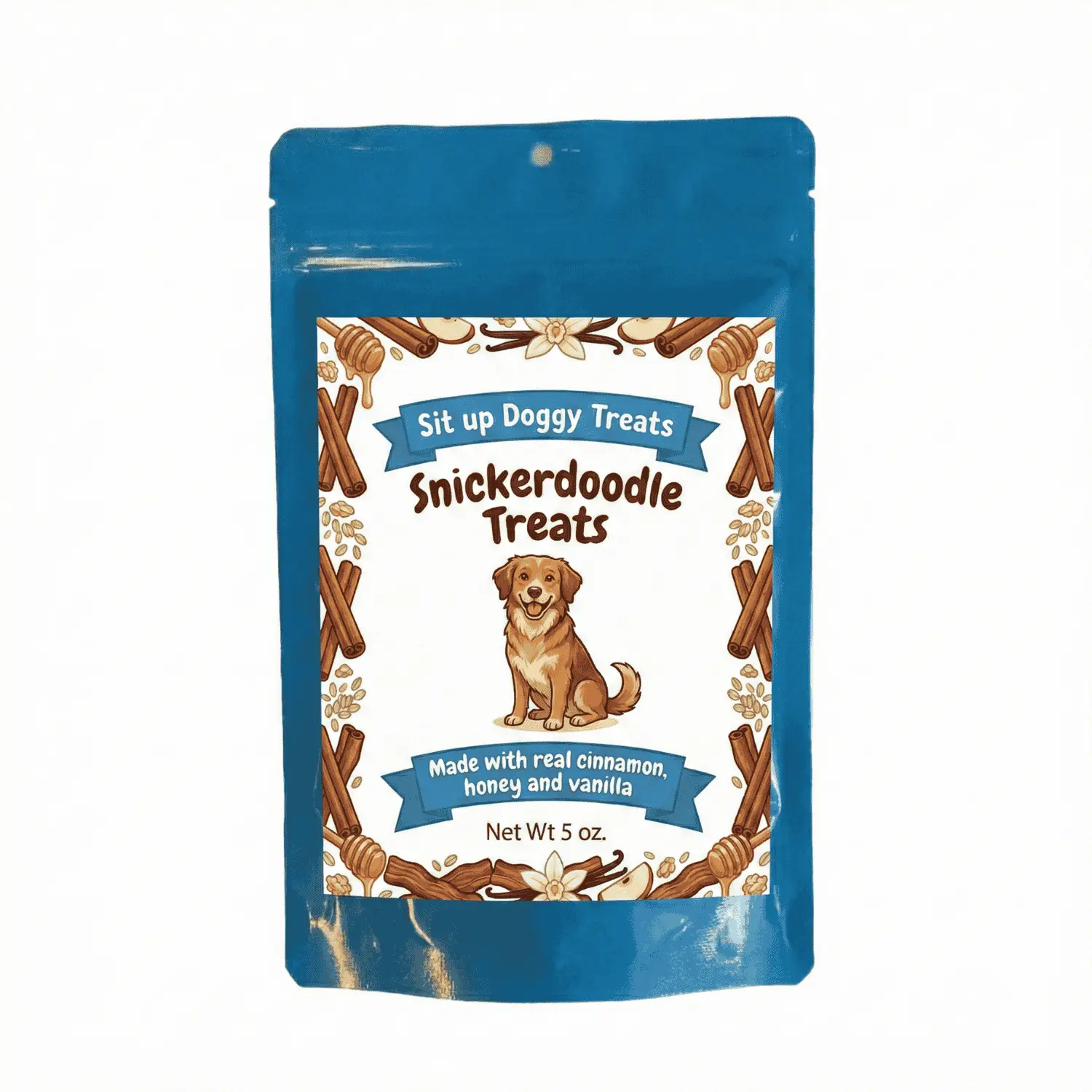
Small-Batch Dog Treats vs Commercial Dog Treats: A Cost Breakdown
Small-batch dog treats vs commercial dog treats is not a comparison of ingredients alone. It’s a comparison of how production is organized, and which costs shrink with volume.
Cost Factor | Small-Batch Production | Mass Production | Does the cost shrink with volume? |
|---|---|---|---|
Ingredient buying | Small orders, little bulk discount | Bulk purchasing, deep discounts | Yes, sharply |
Labor | Hand-mixed, hand-shaped, hand-packed | Automated lines, low labor per unit | Yes, sharply |
Quality control | Frequent checks on every run | Statistical sampling across large runs | Partly, checks per pound fall |
Packaging | Small packaging orders, higher unit cost | High-volume packaging, lower unit cost | Yes, moderately |
Distribution | Direct shipping, no middleman | Retail distribution network | Mixed, direct shipping is priced per box |
Waste and spoilage | Limited runs reduce stale inventory | Long shelf life, but large unsold volume | No, this one can favor small runs |
The gap isn’t linear. A small kitchen carries fixed costs per batch, setup, cleanup, the first-run quality check, the label print run, roughly the same whether the batch is 40 bags or 400.
Here’s how the compounding works in practice:
- Setup and changeover. Every flavor and shape needs its own mixing, cleaning, and calibration. A bakery running four flavors a week pays that four times; a factory running one SKU for a month pays it once.
- Labor per unit. Hand-shaping and hand-packing take minutes per bag regardless of order size. Automation converts those minutes into a machine cycle that costs pennies at volume.
- Ingredient minimums. Suppliers price small orders at a premium and often require minimum quantities. A small maker may pay more per pound and still carry the risk of unused inventory.
- Testing and recordkeeping. Batch-level checks and lot records are per-batch costs. More, smaller batches mean more of them per pound of finished product.
- Packaging minimums. Custom printed bags often carry minimum order quantities that only make sense at scale, so small makers either pay more per unit or use stock packaging.
The trade-off is flexibility and freshness. Limited runs mean treats move from oven to bag to box faster, and a small maker can adjust a recipe or drop a supplier without renegotiating a national contract.
The premium is the price of keeping fixed costs visible.
Why Are Premium Dog Treats So Expensive? Inside the Production Costs
Premium dog treats are expensive because production costs sit in labor, small equipment runs, and quality control rather than raw materials alone. A small bakery’s biggest expense is usually the person doing the work.
Here’s where the money actually goes in a small-batch kitchen:
- Labor costs: Mixing, rolling, cutting, baking in small trays, cooling, and hand-packing all take time. None of it scales down cheaply.
- Production costs: Ovens run below full capacity. Each flavor needs its own setup and cleanup.
- Packaging costs: Small packaging orders cost more per bag than bulk orders.
- Quality control and food safety: Every batch gets checked. Small runs mean more checks per pound of product.
- Shipping costs: Direct-to-door shipping is priced per box, not per pallet.
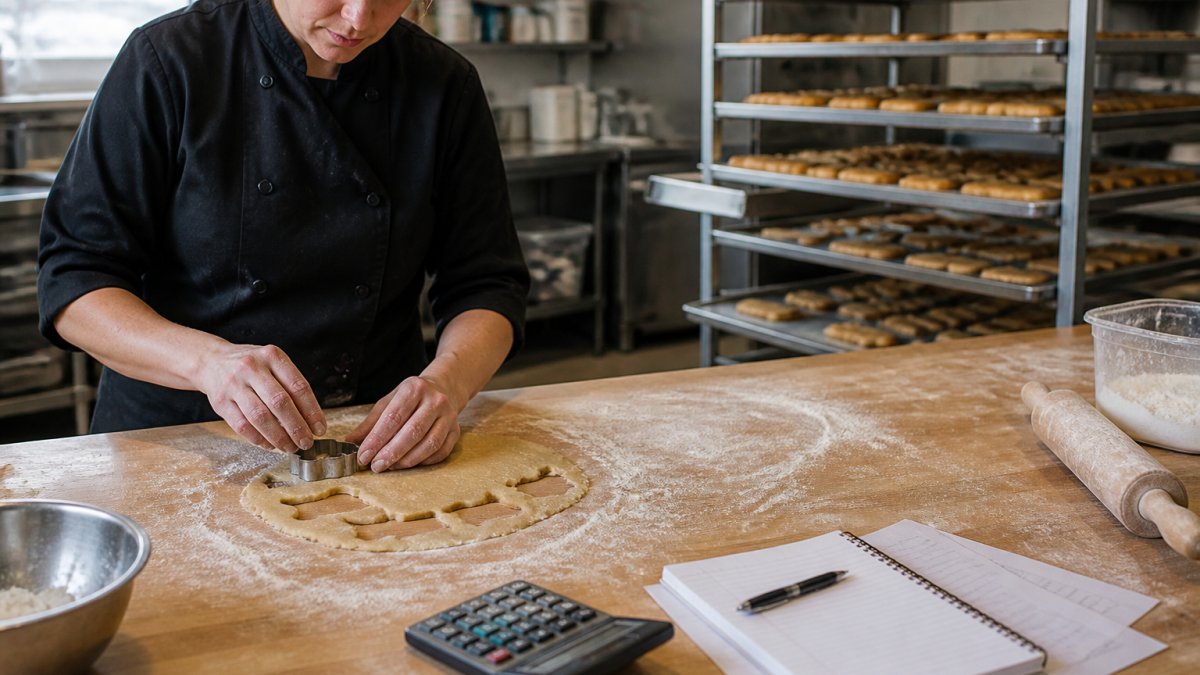
The premium isn’t one big markup. When we bake a run of our crunchy pumpkin biscotti, setup and cleanup time is the same whether we make one tray or ten.
Ingredient Quality and Sourcing: Where Your Money Actually Goes
Ingredient sourcing is where price differences show up most clearly. A short list of recognizable components costs more per pound than a long list padded with fillers.
Fillers like corn and soy are cheap by design: they add bulk, stretch a recipe, and lower cost per pound.
Small makers tend to buy from suppliers they can question directly and adjust when a batch doesn’t meet the bar. That flexibility costs more than locking in the cheapest contract.
Here’s the honest caveat: a higher price is not automatic proof of better ingredients. Some premium-priced products use the same commodity supply chain as budget brands. The ingredient list is your evidence.
How to Compare Dog Treat Prices Per Ounce
Comparing dog treat prices per ounce is the fastest way to see what you’re really paying.
The formula is simple: divide the total price by the net weight in ounces.
Cost per ounce = total price ÷ net weight in ounces
Run it on two bags and the gap becomes concrete. A 5-ounce bag at $15.00 is $3.00 per ounce; a 6-ounce bag at $15.00 is $2.50. Same shelf price, different value.
But cost per ounce is only the first layer. Three adjustments turn it into a real value comparison:
Large Crunchy Dog Treats – 6 Bakery-Inspired Flavors, All-Natural & USA-Made →
- Cost per treat. Divide cost per ounce by the number of treats in the bag, or weigh a representative treat and divide. A 6-ounce bag of large biscuits might hold 12 treats; the same weight in small training bites might hold 90. The per-treat cost can differ by a factor of several even when the per-ounce price is identical.
- Cost per reward. Training treats are often broken into pieces. If one treat breaks into four rewards, your effective cost per reward drops to a quarter of the per-treat cost. Breakable treats for seniors and small pups frequently deliver better value than the bag price suggests.
- Cost per day. A bag used for daily rewards should be judged on how long it lasts, not what it costs. Estimate treats per day, divide the bag’s treat count by that number, and you get days per bag, then divide the bag price by days per bag for a true daily cost.
A worked comparison shows why this matters, a small-batch biscuit at $15.00 for 6 ounces versus a mass-market biscuit at $9.00 for 16 ounces:
Small-batch biscuit | Mass-market biscuit | |
|---|---|---|
Bag price | $15.00 | $9.00 |
Net weight | 6 oz | 16 oz |
Cost per ounce | $2.50 | $0.56 |
Treats per bag (approx.) | 24 | 40 |
Cost per treat | $0.63 | $0.23 |
Treats per day (training) | 4 | 4 |
Days per bag | 6 | 10 |
Cost per day | $2.50 | $0.90 |
Two more adjustments keep it fair:
- Shipping and minimums. Direct-to-door shipping is priced per box, so a single small bag can carry a shipping cost that dwarfs the per-ounce difference. Buying multiple bags per order spreads that fixed cost.
- Spoilage. A cheaper per-ounce bag that goes stale before it’s finished is more expensive per usable treat. Factor in how fast your dog will actually work through it.
FDA guidance on pet food labels and guaranteed analysis explains what the numbers on a pet treat label actually mean, which helps you compare like for like.
When the Premium Is Worth It (And When It Isn’t)
The premium is worth it when the extra cost buys something you can name: a shorter ingredient list, fresher product, or a texture your dog can actually eat. It isn’t worth it when you’re paying for a label with no evidence behind it.
Worth the premium:
- Your dog has a sensitive stomach and needs a limited-ingredient recipe
- You want a treat your senior dog can chew without struggle
- Freshness matters because you use treats daily
- You want to know where and how the product was made
Not worth the premium:
- Your dog has no dietary restrictions and does fine on budget treats
- You’re buying for volume and the price per ounce is far higher with no clear ingredient advantage
- The ingredient list is long and vague despite the price
A common mistake is assuming all premium treats are equal. Some justify the cost with sourcing and small-batch control; others just charge more.
How to Store Natural Dog Treats to Maximize Freshness and Value
Storing natural dog treats properly protects the premium you paid. Treats without artificial preservatives depend on good storage to stay fresh, and stale treats are wasted money.
A simple routine keeps them at their best:
- Keep the bag sealed between servings, pressing out excess air
- Store in a cool, dry place away from direct sunlight
- Keep the original bag so you retain the batch and ingredient details
- Use resealable bags where available to lock in texture
- Work through one bag before opening the next
- Check texture and smell before serving if a bag has been open a while
Soft and crunchy treats behave differently. Soft biscotti stays pliable in a sealed bag, while crunchy treats lose their snap faster in humidity. Our soft peanut butter biscotti comes in a resealable 6 oz bag for exactly this reason.

USDA food safety guidance on storing baked goods covers the general principles behind cool, dry storage that apply to baked treats as well.
Small-batch economics cut both ways. You get fresher product at purchase but carry more freshness responsibility at home. Buy in quantities you’ll actually use.
Conclusion
Small batch dog treats cost more because the savings of mass production never reach a small kitchen. Labor, short runs, careful sourcing, and frequent quality checks stay fixed per batch. That’s the honest trade-off worth understanding before you compare bags.
At The Dog Emporium, we bake in small batches in Pennsylvania with simple, recognizable ingredients. Our treats are breakable for seniors and smaller pups, made in limited-ingredient recipes for sensitive stomachs, and available in bakery-inspired flavors your dog will get excited about. Start shopping and see what a fresher, small-batch treat does for your dog’s treat time.
Frequently Asked Questions
Why do small batch dog treats cost more than commercial treats?
Small batch dog treats cost more because they are made in limited production runs, which means higher labor costs per unit, premium ingredient sourcing, and closer quality control. A commercial facility might produce thousands of pounds per hour, while a small bakery makes dozens. That difference in manufacturing efficiency is the biggest driver of the price premium you see at checkout.
Are expensive dog treats actually worth the money?
They can be, depending on your dog’s needs. If your dog has a sensitive stomach or food allergies, a limited-ingredient treat with no corn, soy, or artificial preservatives may reduce digestive upset and vet visits. For a healthy dog with no sensitivities, a mid-range commercial treat might be fine. Compare cost per ounce and read the ingredient list before deciding whether the premium makes sense for your situation.
How can I compare the value of dog treats per ounce?
Divide the total price by the net weight in ounces to get the cost per ounce. A $15 bag of 6-ounce treats costs $2.50 per ounce, while a $5 bag of 16-ounce treats costs about $0.31 per ounce. But cost per ounce only tells part of the story. Factor in ingredient quality, treat size, and how many treats your dog actually needs per day to get a true value comparison.
How should I store small-batch dog treats to keep them fresh?
Store natural dog treats in an airtight container in a cool, dry place away from direct sunlight. Reseal the original bag tightly if it has a zipper seal, or transfer treats to a glass jar with a lid. Most small-batch treats without artificial preservatives stay fresh after opening.
Leave a Reply