Table of Contents
- Small Batch Dog Treats vs Mass Produced: The Core Differences
- Side-by-Side Comparison: Small-Batch vs Mass-Produced Dog Treats
- How to Read Dog Treat Labels Without Getting Fooled
- Dog Treat Ingredients: What Separates Real Food From Fillers
- Dog Treat Shelf Life: Preservatives, Storage, and Freshness
- Food Safety, Regulation, and How to Verify Quality Claims
- Cost Per Serving and Value: Is Small Batch Worth the Price?
- Conclusion: Choosing the Right Treat for Your Dog
- Frequently Asked Questions
Last Updated: October 13, 2026
Small Batch Dog Treats vs Mass Produced: The Core Differences
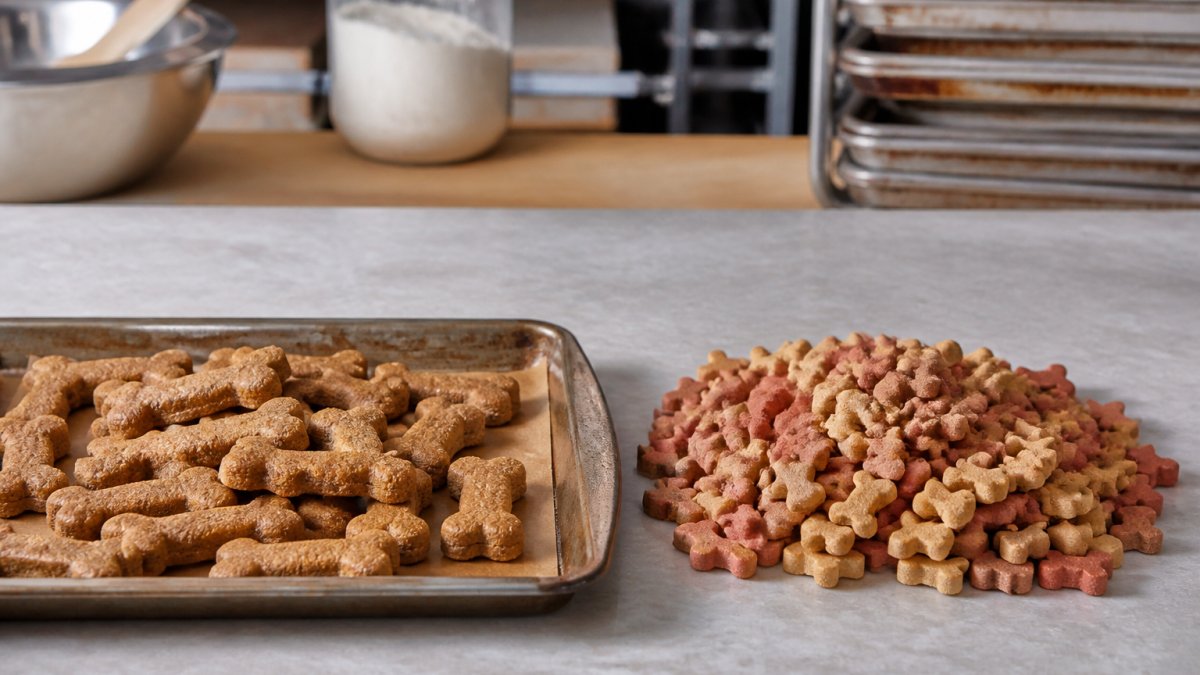
Small batch dog treats are made in limited quantities, often by hand, in small facilities that bake in small runs.
Batch Size, Production Scale, and Processing Methods
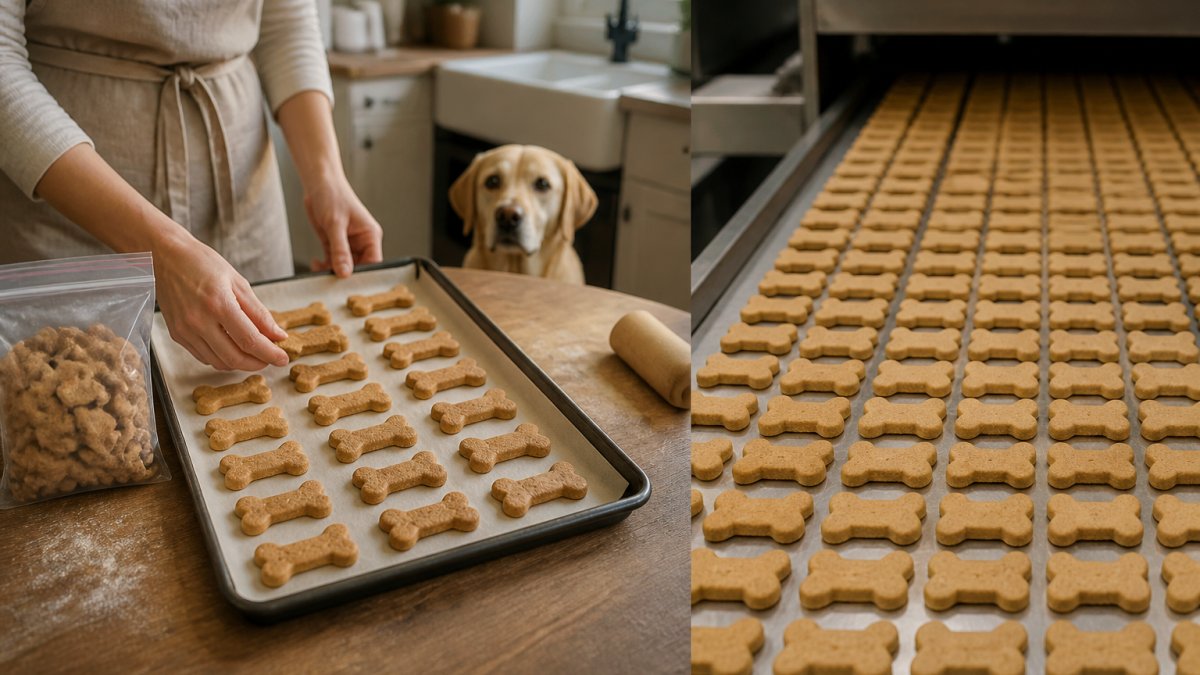
Production scale decides how a treat gets made. A small-batch bakery mixes dough in small mixers, shapes treats by hand or with simple cutters, and bakes in batches small enough to inspect piece by piece. A mass-produced plant runs continuous extrusion and conveyor ovens, where consistency comes from machinery and volume, not a person watching the tray. Neither is automatically better: a small bakery optimizes for freshness and control, a large plant for shelf stability and low cost per unit.
Freshness, Traceability, and Recall Response
Freshness and traceability favor small batches. When a bakery bakes in small runs, treats reach customers sooner and each batch can be traced to a specific day and recipe, so a small maker can pull an affected batch quickly. Large plants have sophisticated lot tracking too, but a single recall can cover enormous volumes. The practical question: can the maker tell you when your bag was baked, and what went into it?
Side-by-Side Comparison: Small-Batch vs Mass-Produced Dog Treats
Small-batch treats win on freshness, ingredient transparency, and traceability. Mass-produced treats win on price per serving, convenience, and shelf life. The right choice depends on what you value more.
Factor | Small-Batch Treats | Mass-Produced Treats |
|---|---|---|
Batch size | Small, hand-checked runs | Thousands of units per shift |
Ingredient list | Short, recognizable | Often long, with fillers |
Freshness | Baked close to shipping | Built for long shelf life |
Traceability | Batch-level, easy to trace | Lot-level, large volumes |
Preservatives | Usually none or minimal | Common for stability |
Cost per serving | Higher | Lower |
Best for | Sensitive stomachs, daily wellness | Budget feeding, large households |
Neither column is a verdict on safety. A well-run large plant and a careful small bakery can both make good treats. What differs is how much you can verify, and how fresh the product is.
How to Read Dog Treat Labels Without Getting Fooled
Reading a dog treat label comes down to three things: the ingredient order, the presence of named allergens, and whether the front of the bag matches the back. The FDA guidance on pet food labeling explains how ingredient statements and guaranteed analyses must be presented, which is worth knowing before you trust any claim on the front panel.
Watch for these common label traps:
- “Natural” has a loose regulatory meaning. It does not mean organic or preservative-free.
- “Premium” and “gourmet” are marketing words with no fixed standard.
- Split ingredients. A maker can list “wheat flour, wheat bran, wheat germ” separately so no single wheat entry ranks first.
The back of the bag is where the truth lives. Read it before the front.
Dog Treat Ingredients: What Separates Real Food From Fillers
Real-food treats start with ingredients you would recognize in your own kitchen: oat flour, peanut butter, pumpkin, eggs, honey, real cinnamon. Filler-heavy treats lean on cheap starches, artificial colors, and unnamed by-products to hit a price point. The gap is what your dog actually digests: a short, simple recipe is easier to troubleshoot when a dog has a reaction, because there are fewer variables to eliminate.
Single-Ingredient vs Multi-Ingredient Treats
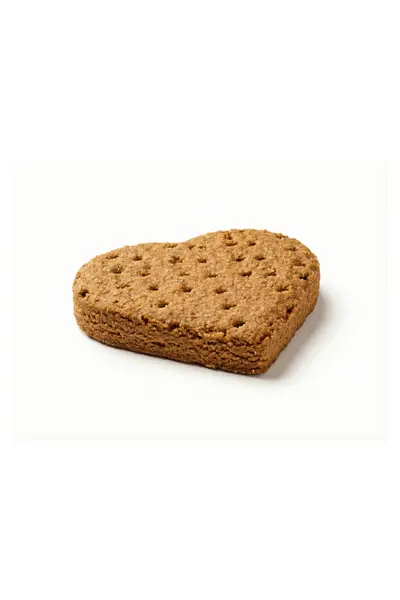
Single-ingredient treats contain one component, like a dehydrated protein. Multi-ingredient treats combine several, like our Crunchy Pumpkin Biscotti, made with oat flour, pumpkin, cinnamon, and eggs. Single-ingredient treats suit elimination diets, where you isolate one variable at a time; multi-ingredient treats offer more variety and better palatability. For most dogs without confirmed allergies, a limited-ingredient multi-ingredient treat is the better everyday choice.

Allergies, Sensitivities, and Limited-Ingredient Recipes
Limited-ingredient recipes exist for dogs with food sensitivities. The most common triggers in dogs are proteins like beef and chicken, plus grains like wheat and corn. A limited-ingredient treat avoids those and keeps the list short. Our treats skip wheat, beef, corn, soy, and chicken where applicable, which is why owners of sensitive dogs tend to come back to them. The ASPCA’s guidance on people foods that are toxic to dogs is a useful reference for what should never appear in a treat.
Dog Treat Shelf Life: Preservatives, Storage, and Freshness
Shelf life in dog treats is not about the calendar. It is about moisture, oxygen, and packaging, the three variables that decide whether a treat stays crunchy for two weeks or two years, and why small-batch and mass-produced treats age differently.
What Actually Drives Shelf Life
- Water activity. Bacteria, mold, and yeast need available water to grow. A treat baked to a low moisture level is more stable than a soft, chewy one, which is why jerky-style and hard-baked biscuits keep longer than soft training treats.
- Oxygen exposure. Fats go rancid when they meet air. Nitrogen flushing and oxygen-absorbing packets slow that down; a simple resealable bag slows it less.
- Preservatives. Mixed tocopherols (a form of vitamin E), rosemary extract, and citric acid are common natural preservatives. BHA, BHT, ethoxyquin, and propylene glycol are synthetic. A treat with none relies on low moisture and airtight packaging instead.
How Small-Batch and Mass-Produced Treats Age Differently
Mass-produced treats are formulated for a long, predictable shelf life because they sit in warehouses, on trucks, and on store shelves before reaching a bowl, usually meaning lower moisture, added preservatives, or both. Small-batch treats are often baked closer to shipping and may skip synthetic preservatives, which shortens the window but keeps texture and aroma closer to fresh. Neither is automatically safer: a dry, preserved treat that sat in a hot warehouse for a year is not fresher than a small-batch biscuit baked last week.
Batch Codes, Production Dates, and Recalls
- Batch or lot code. Every package should carry one. It ties the bag to a specific production run, which is how a maker or regulator traces a problem back to a source.
- Production or “baked on” date. A best-by date tells you when the maker thinks the treat is still good; a production date tells you when it was actually made. The second is more useful.
- Recall scope. A mass-produced recall can cover millions of units across many states because so much product moves through one line. A small-batch recall is usually narrower, but only if the maker tracks batches.
Storage That Actually Works
- Move treats to an airtight container once the bag is opened.
- Store in a cool, dry place; heat and humidity accelerate rancidity and mold.
- Freeze what you will not use within a few weeks. Most baked treats freeze well and thaw quickly.
Food Safety, Regulation, and How to Verify Quality Claims
A common assumption is that small-batch treats are unregulated and mass-produced treats are heavily regulated. Neither half is quite right. Production scale does not determine whether a facility is overseen or whether a product is safe. What it changes is the type of risk and how much you, as a buyer, can verify.
Large Crunchy Dog Treats – 6 Bakery-Inspired Flavors, All-Natural & USA-Made →
Who Oversees Dog Treats
Dog treats are regulated as animal food, and the framework is shared across production scales:
- The FDA sets the rules under the Federal Food, Drug, and Cosmetic Act and the Food Safety Modernization Act (FSMA). The FDA’s Center for Veterinary Medicine (CVM) handles animal food policy. Facilities that manufacture, process, pack, or hold animal food for sale in the U.S. must generally register with the FDA and follow FSMA preventive controls rules, unless they qualify for a small-business exemption.
- State feed regulators license manufacturers, inspect facilities, and enforce state labeling and ingredient laws. Most states follow Association of American Feed Control Officials (AAFCO) model regulations.
- AAFCO itself is not a regulator. It is a membership organization of state and federal officials that publishes model rules, which states adopt, hence AAFCO language on labels.
Small facilities are not automatically exempt: a small bakery selling across state lines is generally subject to the same registration and preventive controls framework as a large plant, though some small businesses qualify for modified requirements. Scale does not equal oversight, and oversight does not equal safety.
What Regulation Does and Does Not Guarantee
Regulation sets a floor: facilities must be registered, follow preventive controls, use safe and properly labeled ingredients, and make truthful label claims. It does not guarantee a specific batch was handled well, that a supplier’s ingredient was clean, or that a recall will be handled quickly. Those depend on the operator, which is why the useful question is not “is this regulated?” but “what can this maker show me?”
How to Verify a Claim Without Relying on the Label
Labels use words that sound like guarantees but are not. “Natural,” “premium,” “gourmet,” and “small-batch” have no fixed regulatory definition on a dog treat bag. “Organic” does, and requires certification; “Made in the USA” has specific rules. Everything else is marketing unless the maker can back it up. Run this checklist against any brand:
- Facility. Can the maker name the facility where the treats are made, and is it FDA-registered? Registration is public information.
- Batch. Can they tell you the production date or batch code for your order?
- Ingredients. Is the full ingredient list published, not just the highlights on the front of the bag?
A maker who can answer those questions without hesitation is usually a maker worth trusting. Vague answers, or answers that redirect to the website’s marketing page, are a warning sign. The FDA’s animal food and pet food safety information lays out the regulatory framework, and the FDA’s recall database is searchable by brand.
The Honest Trade-Off
A large plant has more resources for testing, supplier audits, and traceability. A small bakery has more visibility into each batch and a shorter path from oven to bag. Neither advantage cancels the other, ask both the same questions and see who answers.
Cost Per Serving and Value: Is Small Batch Worth the Price?
Small-batch treats cost more per serving, and there is no way around that: hand labor, small runs, real ingredients, and no cheap fillers push the price up. Our large crunchy treats run $4.00 per piece, and our bagged treats are $15.00. Mass-produced treats will almost always beat that on price. What you buy with the difference is fresher product, a shorter ingredient list, and a maker who knows what went into your dog’s bag.
Conclusion: Choosing the Right Treat for Your Dog
The small batch dog treats vs mass produced debate has no single winner, because the right answer depends on your dog. If your dog has a sensitive stomach, a known allergy, or you want to know exactly what is in every bite, small-batch treats are worth the premium.
At The Dog Emporium, we bake in small batches in Donora, Pennsylvania, using limited ingredients and no artificial preservatives, colors, or flavors. Our treats are breakable for seniors and small pups, and some are backed by our bottom-of-the-bag guarantee. Start shopping and find the flavor your dog will beg for by name.
Frequently Asked Questions
What is the difference between small-batch and mass-produced dog treats?
Small-batch dog treats are made in limited quantities, often by hand or with minimal automation, which allows closer quality control and fresher ingredients. Mass-produced treats are made on high-speed lines in large volumes, usually with preservatives and longer shelf life. The difference shows up in ingredient lists, texture, freshness, and how quickly a maker can respond if something goes wrong with a batch.
Are small-batch dog treats healthier than mass-produced treats?
Not automatically. Health depends on the recipe, not the batch size. A small-batch treat made with oat flour, peanut butter, and banana can be a better fit for a sensitive dog than a mass-produced biscuit loaded with artificial colors. Check the ingredient list, look for limited-ingredient recipes, and confirm the treat avoids your dog’s known allergens before assuming small batch equals healthier.
How can you tell if dog treats have high-quality ingredients?
Start with the first five ingredients on the label. If you recognize them as real food, like oat flour, pumpkin, peanut butter, or honey, that is a good sign. Watch for artificial preservatives, colors, and vague terms like ‘meat meal’ or ‘by-product.’ Look for a named manufacturer, a production location, and a batch or lot code you can trace if needed.
Do small-batch dog treats have a shorter shelf life?
Often, yes. Small-batch treats usually skip artificial preservatives, so they rely on proper baking, packaging, and storage to stay fresh. A resealable bag stored in a cool, dry place typically keeps quality for several weeks after opening. Check the best-by date, reseal the bag tightly after each use, and buy sizes you can finish within a reasonable window.
How many treats can a dog have per day?
A common guideline is the 10 percent rule: treats should make up no more than 10 percent of your dog’s daily calories, with the rest coming from a complete balanced diet. For a small dog, that might mean one or two small treats; for a large dog, a few more. Adjust based on your dog’s size, activity level, and any vet guidance for weight or health conditions.
Leave a Reply