Table of Contents
- How to Choose the Best Treats for Dogs with Sensitive Stomachs
- Limited Ingredient Dog Treats: Fewer Components, Less Risk
- Single Ingredient Dog Treats: The Simplest Place to Start
- Homemade Dog Treats for Sensitive Stomachs: Recipes and Realistic Trade-Offs
- Training Treats for Dogs with Sensitive Stomachs: Small Rewards, Big Focus
- Portion Size, Treat Calories, and Controlled Elimination Diets
- When to Call Your Vet About Persistent Digestive Symptoms
- Conclusion: Matching the Right Treat to Your Dog’s Digestive Needs
- Frequently Asked Questions
Last Updated: October 15, 2026
How to Choose the Best Treats for Dogs with Sensitive Stomachs
Finding the best treats for dogs with sensitive stomachs starts with one rule: fewer ingredients, clearly named. A treat with four recognizable components gives a reactive gut far less to object to than one with twenty.
Most owners blame the wrong thing. They switch brands, the upset continues, and they never learn which ingredient caused it. The fix is a method, not another gamble.
Ingredients That Commonly Trigger Food Sensitivities
The usual suspects in dog treats are beef, chicken, wheat, corn, soy, and dairy. These proteins and grains appear in a huge share of commercial snacks, which is why so many “gentle” formulas still cause problems.
A food sensitivity is different from a food allergy. Sensitivity builds gradually and shows up as gas, loose stools, or itching. An allergy is an immune response and can be sudden and severe. If your dog has ever had facial swelling or trouble breathing after eating, that is an emergency, not a treat-selection problem.
A Practical Label-Reading Method for Spotting Problem Additives
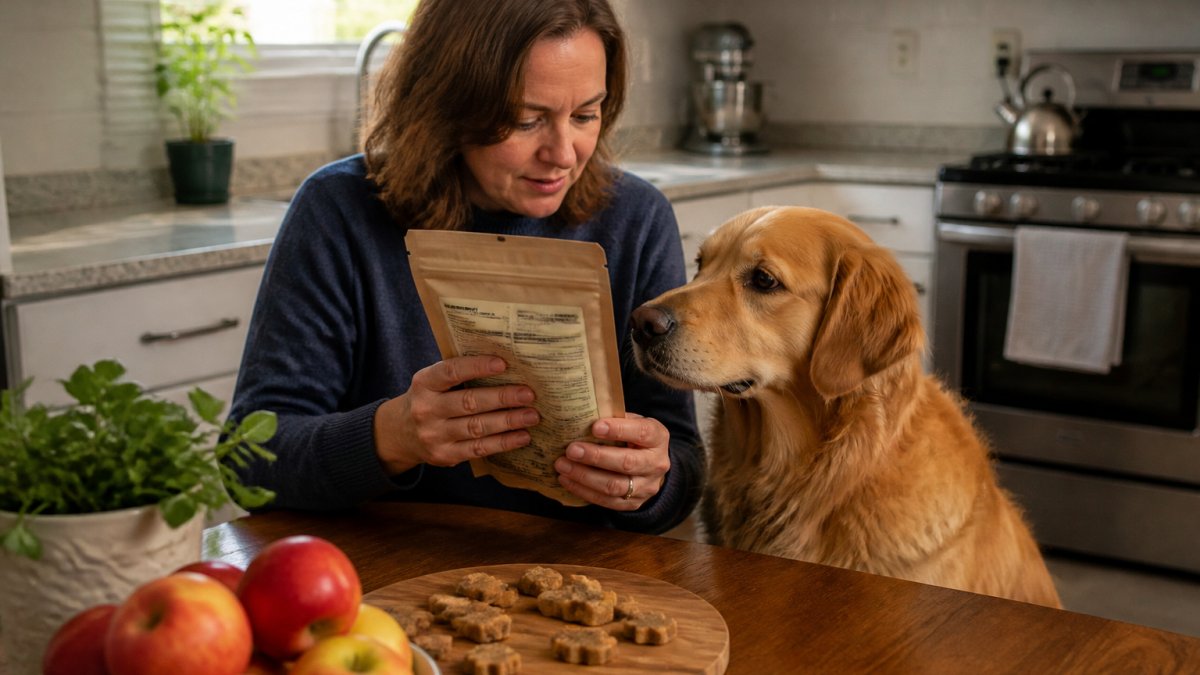
Read the ingredient list in this order:
- Count the ingredients. Under ten is a good sign; under six is better.
- Find the protein first. If it is unnamed (“meat meal,” “poultry”), skip it.
- Scan for artificial preservatives: BHA, BHT, ethoxyquin, propyl gallate.
- Check for added colors and sweeteners, including xylitol, which is toxic to dogs.
- Look for a named fat source. “Animal fat” tells you nothing.
Limited Ingredient Dog Treats: Fewer Components, Less Risk
Limited ingredient dog treats are the practical middle ground. They keep the recipe short and skip the most common triggers, which makes them a sensible starting point for a dog whose gut is easily thrown off.
A genuinely limited recipe usually names four to eight recognizable components, leads with a single named protein, and avoids the usual suspects: beef, chicken, wheat, corn, soy, and dairy. If the bag says “limited ingredient” but lists fifteen items, including “animal digest” or “meat meal,” it is not doing the job.
Comparing Treat Formats on the Same Criteria
Rather than ranking brands, compare every option on the same six points: protein source, number of ingredients, texture, piece size, fat content, and how well it fits your dog’s known triggers. That framework travels across every product you pick up.
Treat Type | Typical Ingredients | Texture and Size | Best For | Watch Out For |
|---|---|---|---|---|
Limited ingredient biscuit | 4-8 named items | Crunchy, breakable | Dogs with known triggers | “Limited” is not regulated |
Single ingredient | 1 item | Varies; often soft or freeze-dried | Elimination trials | Low training value; easy to overfeed |
Freeze-dried protein | 1 named protein | Light, crumbles easily | High-value training | Can be rich; introduce slowly |
Soft chew | 5-10 items | Soft, easy to break | Puppies, seniors, dental issues | Often higher in fat and moisture |
Homemade | Whatever you add | Depends on recipe | Full control | Nutrient gaps; cross-contamination |
Standard commercial | 15+ items | Varies | Dogs with no history | Hidden proteins and additives |
Freeze-Dried and Longer-Lasting Options
Freeze-dried single-protein treats, such as salmon, lamb, or venison, sit at the intersection of limited ingredient and high value. They are light, crumble into small training pieces, and keep a strong smell that dogs respond to.
Longer-lasting chews deserve caution. Bully sticks, pig ears, and many dental chews are high in fat or made from proteins that commonly trigger sensitivities, and a dog who gnaws for an hour is swallowing a lot of material. If you want a chew, look for a single named protein and a size matched to your dog’s mouth, and supervise every session.
Matching the Treat to the Dog, Not the Trend
One treat type does not fit every dog. A puppy with a developing gut, a senior with slower digestion, and a dog on a prescription diet for a diagnosed condition all need different things. Puppies often do best with small, soft, low-fat pieces. Seniors may need a softer texture for aging teeth and a lower calorie density.
Our crunchy pumpkin biscotti, for example, uses oat flour, pumpkin, cinnamon, and eggs, and contains no wheat, beef, corn, soy. And no chicken ever. That short list is the whole point. When something does go wrong, you have only a handful of suspects to work through.

Single Ingredient Dog Treats: The Simplest Place to Start
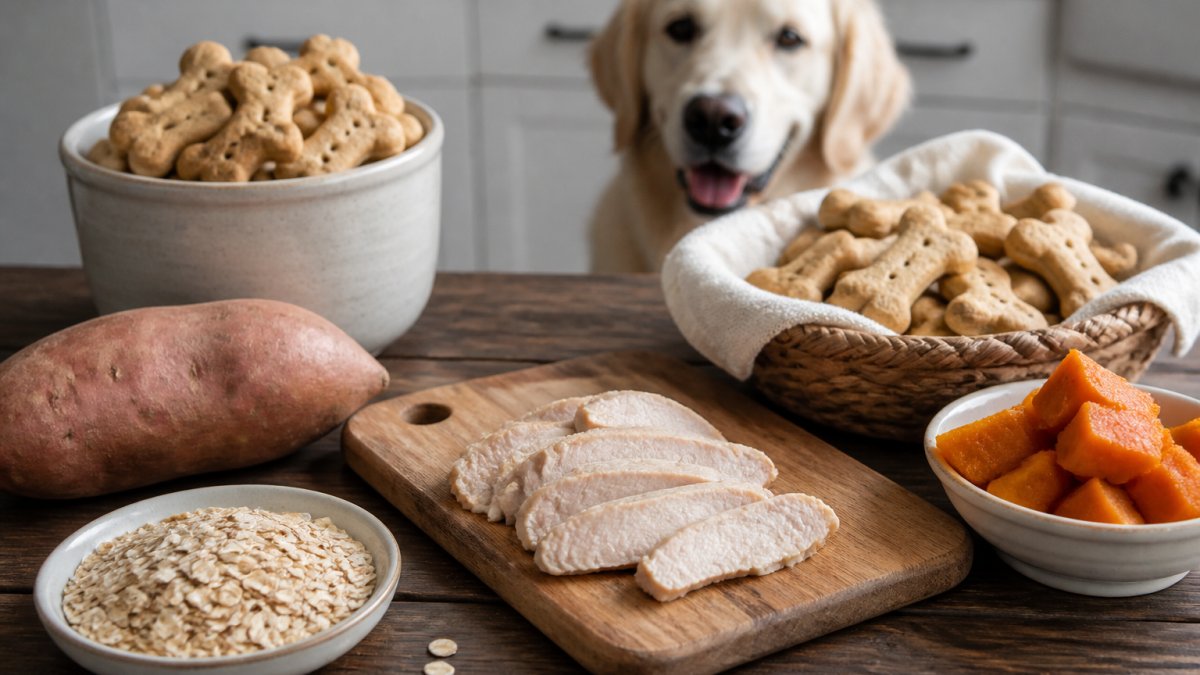
Single ingredient dog treats contain exactly one thing, which makes them the cleanest option for a controlled elimination diet. Plain cooked pumpkin, a slice of baked sweet potato, or a piece of freeze-dried salmon all qualify.

The trade-off is real. A single-ingredient treat is often low value in training, and some are messy or perishable.
Novel proteins fit here too. Lamb, venison, rabbit, duck, and insect protein are all options when chicken and beef are off the table. The catch: a protein is only novel the first time. Once your dog eats it regularly, it stops being novel.
Homemade Dog Treats for Sensitive Stomachs: Recipes and Realistic Trade-Offs
Homemade dog treats for sensitive stomachs give you total control over every ingredient, and that control is worth a lot when you are trying to isolate a trigger. A basic recipe: two cups oat flour, one cup pure pumpkin puree, two eggs, baked at 350°F for about 20 minutes, then cooled and cut small.
Two honest caveats. First, homemade treats are rarely nutritionally complete, so they should stay a small share of daily calories. Second, “homemade” is not automatically gentle. Greek yogurt, peanut butter with xylitol, and rich meats cause problems in plenty of dogs. Our peanut butter doesn’t contain xylitol.
Crunchy Pumpkin Biscotti Dog Treats – Limited Ingredients, Big Tail Wags →

Training Treats for Dogs with Sensitive Stomachs: Small Rewards, Big Focus
Training treats for dogs with sensitive stomachs need to be tiny, high value, and easy to break.
Our Hi 5 Peanut Butter Banana treats use just three core ingredients, oat flour, peanut butter, and banana, and they break into small pieces without crumbling.
A common mistake is treating a “high-value” reward as a big one. It is not. Value comes from smell and taste, not volume. A pea-sized piece of something your dog loves beats a whole biscuit every time.
Portion Size, Treat Calories, and Controlled Elimination Diets
Treat calories should stay under about ten percent of your dog’s daily intake. That is the number most owners miss, and it is usually why a “sensitive stomach” dog keeps having soft stools despite eating a gentle diet. A 30-pound dog eating roughly 700 calories a day has a treat budget of about 70 calories, which is fewer biscuits than most owners assume. Weigh or count treats into that budget rather than adding them on top of meals.
A Repeatable Method for Introducing One Treat at a Time
A controlled elimination and reintroduction trial is the only reliable way to learn what your dog tolerates. It is a method, not a diagnosis, and it will not tell you whether your dog has a true allergy.
- Start with a baseline. Feed your dog’s current diet and no treats for five to seven days, and note stool quality, gas, itching, and energy each day.
- Introduce one new treat. Give a single small piece, then a normal portion over two to three days, with nothing else new.
- Track for a full week. Record what you fed, how much, and any change in symptoms. A simple notebook or phone note is enough.
- Remove and wait. If symptoms appear, stop the treat and wait until your dog returns to baseline, usually several days.
- Reintroduce one variable at a time. If symptoms return with the same treat, you have a strong signal. If they do not, the earlier reaction may have come from something else.
- Repeat with the next candidate. Space each new introduction at least a week apart so you are never guessing which change caused what.
Most practitioners find that owners who track for two to three weeks learn more than owners who switch brands every few days. The pattern matters more than any single data point.
When Symptoms Go Beyond a Treat Problem
Not every upset stomach is a food sensitivity, and treating it like one can delay care.
The American Veterinary Medical Association’s pet owner resources offers guidance on when digestive symptoms need examination. The FDA’s pet food recall database is worth checking whenever a new bag triggers symptoms, since a recall may explain a sudden reaction. For general digestive health background, the Merck Veterinary Manual is a reliable reference.
When to Call Your Vet About Persistent Digestive Symptoms
Call your vet if vomiting or diarrhea lasts more than 24 to 48 hours, if you see blood, if your dog stops eating, or if there is weight loss, lethargy, or repeated episodes over weeks. These signs point to something beyond a treat sensitivity.
The American Veterinary Medical Association’s pet owner resources offers guidance on when digestive symptoms need examination. The FDA’s pet food recall database is worth checking whenever a new bag triggers symptoms, since a recall may explain a sudden reaction. For general digestive health background, the Merck Veterinary Manual is a reliable reference.
Conclusion: Matching the Right Treat to Your Dog’s Digestive Needs
A dog with a sensitive stomach is not doomed to a boring treat life. The path is short ingredient lists, one change at a time, and honest portion control. That is exactly how we bake at The Dog Emporium: small batches in Donora, Pennsylvania, with limited-ingredient recipes that skip wheat, beef, corn, soy, and chicken.
Our breakable biscotti suit seniors and small pups, and our soft peanut butter biscotti are easy on older teeth. Start shopping and find the treat your dog’s stomach actually agrees with.
Frequently Asked Questions
Which ingredients should dogs with sensitive stomachs avoid?
Common triggers include beef, chicken, wheat, corn, soy, and dairy. Artificial preservatives, colors, and flavors can also cause digestive upset. A practical approach is to check labels for these ingredients and look for treats that explicitly avoid them. Limited-ingredient and single-ingredient options make it easier to isolate what works. If symptoms persist after switching, work with your vet to identify the specific trigger through a controlled elimination diet.
Are homemade dog treats a good option for sensitive stomachs?
Homemade dog treats give you full control over what goes in, which helps when you are isolating a trigger ingredient. Simple recipes using oat flour, pumpkin, or sweet potato are gentle starting points. The trade-off is shelf life and consistency. If you prefer the convenience of pre-made options, small-batch treats with short ingredient lists offer similar simplicity without the prep work.
How do I introduce a new treat to a dog with a sensitive stomach?
Start with a single small piece and wait 24 to 48 hours. Watch for changes in stool quality, gas, or appetite. If nothing changes, gradually increase to a normal portion over several days. Keep a simple log of what you fed and when so you can trace any reaction back to a specific treat. This controlled approach is the same method vets use when building an elimination diet.
What is the 90/10 rule for dogs?
The 90/10 rule means 90 percent of your dog’s daily calories come from a complete and balanced diet, and no more than 10 percent come from treats. For a dog eating 400 calories a day, that leaves about 40 calories for treats. This matters for dogs with sensitive stomachs because over-treating can upset digestion even when the treat itself is gentle. Measure treats into your dog’s daily calorie total rather than adding them on top.
Can training treats for dogs with sensitive stomachs still be effective?
Yes. Small pieces of limited-ingredient or single-ingredient treats work well for training because you can break them into tiny bits and reward frequently without overfeeding. Soft textures are easier to chew quickly during sessions. The key is keeping the total treat volume low enough that it does not disrupt your dog’s regular diet or trigger digestive upset.
Leave a Reply