Last Updated: October 25, 2026
Quick Summary
Choose artisanal dog treats for puppies because small-batch baking gives you control: shorter ingredient lists, real food aromas, and softer textures that suit small mouths. The trade-off is a higher cost per bag and shorter shelf life, but for a puppy eating a few small pieces a day, that trade usually favors the fresher option.
- Small-batch treats often have five ingredients or fewer and no artificial preservatives.
- Treats should make up no more than about ten percent of a puppy’s daily calories.
- Training treats should be pea-sized or smaller to keep sessions fast and calories in check.
- Switch a puppy to a new treat gradually over three to five days to avoid loose stools.
- Ask a maker where it is made, its batch sizes, full ingredients, and money-back guarantee.
Table of Contents
- Why Choose Artisanal Dog Treats for Puppies? The Case for Small-Batch
- Healthy Treats for Puppies: What Actually Matters in the Ingredient List
- Soft Puppy Training Treats: Texture, Size, and High-Value Rewards
- How Many Treats Can a Puppy Have? Calories and Portion Control
- Puppy Treat Ingredients to Avoid and How to Read a Label
- How to Evaluate Artisanal Treat Makers Before You Buy
- Transitioning a Puppy to a New Treat Without Stomach Upset
- Choosing Your Puppy’s First Artisanal Treat at The Dog Emporium
- Frequently Asked Questions
Why Choose Artisanal Dog Treats for Puppies? The Case for Small-Batch
If you are wondering why choose artisanal dog treats for puppies, the short answer is control. Small-batch bakers work in short runs, so every batch gets watched, weighed, and tasted for freshness.
At The Dog Emporium, we bake our artisanal dog treats in small batches in Pennsylvania, using simple ingredients you can actually pronounce. That is not a marketing line. It changes what ends up in the bag.
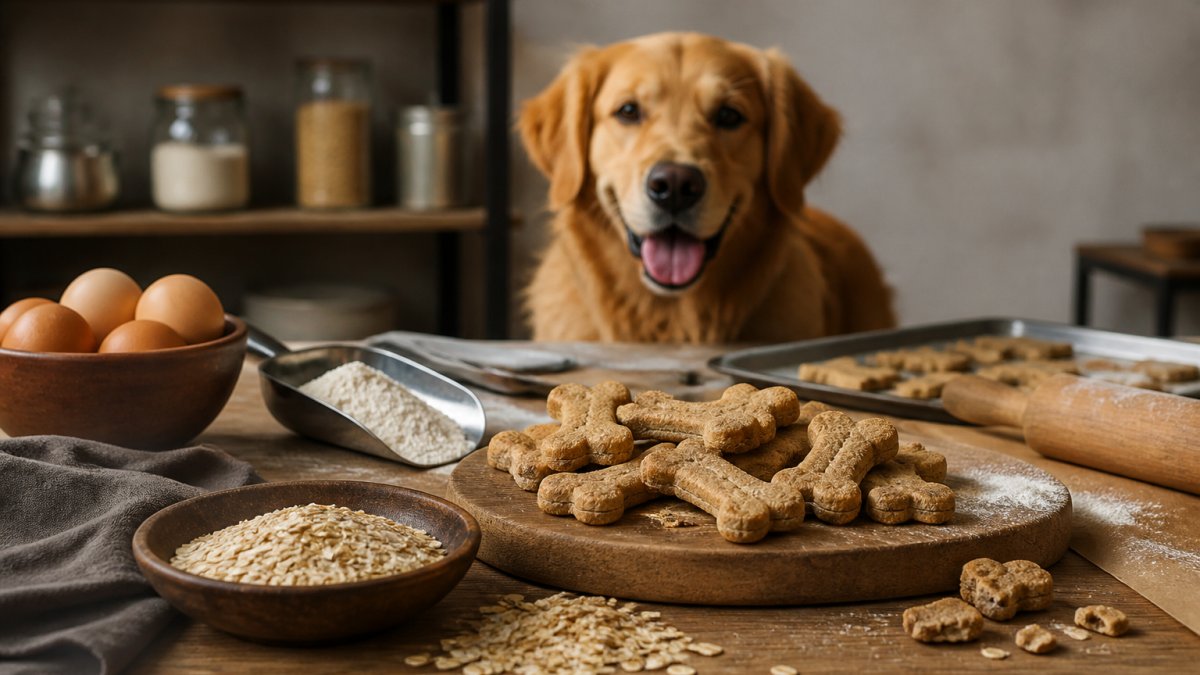
Artisanal dog treats are small-batch baked goods made with limited, recognizable ingredients rather than mass-produced kibble-style biscuits. The difference shows up in texture, smell, and how your puppy’s stomach handles them.
What Sets Artisanal Treats Apart from Commercial Bags
Mass-market treats are built for shelf life and volume. That usually means longer ingredient lists, added preservatives, and textures designed to survive months in a warehouse.
Small-batch treats are built for freshness and digestibility. A few things tend to stand out:
- Shorter ingredient lists, often five items or fewer
- Real food aromas instead of artificial flavoring
- Softer or breakable textures that suit small mouths
- Batch sizes small enough for hands-on quality checks
The trade-off is real: artisanal treats cost more per bag and may not last as long on the shelf. For a puppy eating a few small pieces a day, that trade usually favors the fresher option.
Healthy Treats for Puppies: What Actually Matters in the Ingredient List
Healthy treats for puppies come down to three things: recognizable ingredients, a texture your puppy can chew safely, and a portion that fits their daily calorie budget. Everything else is detail.
Start with the first five ingredients. That is where the real formula lives. You want named proteins, whole grains or alternative flours, and real produce, not “meat meal” and “natural flavor.”
Our Hi 5 Peanut Butter Banana Dog Treats use just three ingredients: oat flour, peanut butter, and banana. That is the standard we would point any puppy owner toward.

A few checks worth making on any bag:
- Is the first ingredient a named food, not a by-product?
- Are there artificial colors or preservatives?
- Does the texture match your puppy’s teeth and jaw strength?
- Is there a clear feeding guide on the package?
Why Ingredient Order Matters
Ingredients are listed by weight (the FDA). If sugar or a filler sits near the top, the treat is mostly filler. If a named protein or whole grain leads the list, you are getting real nutrition per bite.
Soft Puppy Training Treats: Texture, Size, and High-Value Rewards
Soft puppy training treats work better than crunchy ones for one simple reason: speed. A puppy that can chew and swallow in two seconds gets back to learning in two seconds.
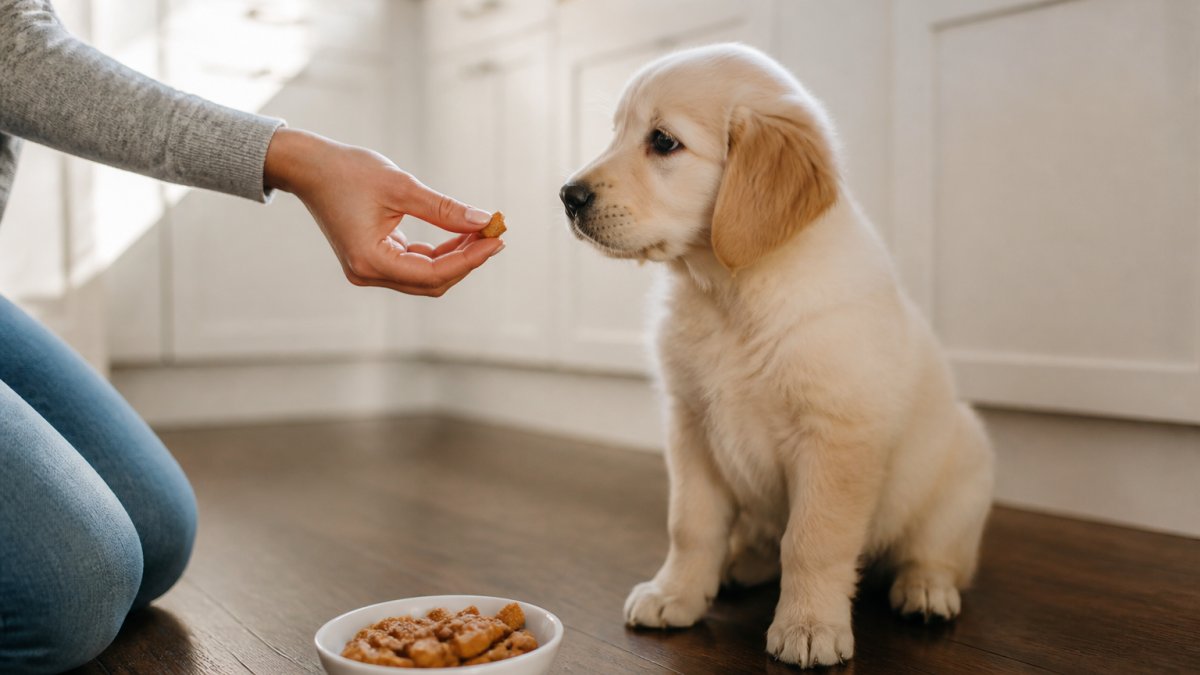
Size matters just as much. Training treats should be pea-sized or smaller. You will hand out a lot of them in a session, and big pieces add up fast.
Our Soft Peanut Butter Biscotti Dog Treats break into small pieces easily, which makes them a practical high-value reward for recall, crate training, and nail trims.

- Everyday tier: small, simple, low-calorie pieces
- High-value tier: stronger aroma, softer texture, reserved for tough tasks
- Never train with a full-size treat; break it down first
How Many Treats Can a Puppy Have? Calories and Portion Control
Treats should make up no more than about ten percent of a puppy’s daily calories (Creating A Nutritional Plan). The other ninety percent comes from a complete puppy food that carries the nutrition they need to grow. That ten percent rule is the simplest guardrail you can use, but it only works if you know what ten percent actually looks like in pieces.
Here is a practical method to turn that percentage into a daily treat budget:
- Find your puppy’s daily calorie target. Your puppy food bag or your veterinarian will give you a daily calorie range based on age and expected adult weight. For example, a puppy that needs 500 calories per day has a treat budget of about 50 calories.
- Weigh a few treats once. Use a kitchen scale to weigh five pieces of the treat you plan to use. Divide the total weight by five to get the average weight per piece. Then check the treat package for calories per ounce or per gram, or use a pet calorie calculator if the package lists calories per treat.
- Do the math once, then eyeball it. If a treat piece is 5 calories, a 50-calorie budget allows about 10 pieces per day. Write that number on the bag with a marker.
- Subtract from meals, not from nutrition. If you plan a heavy training day with extra treats, reduce the puppy’s meal portion slightly that day so total calories stay on target. Do not skip meals, puppies need consistent nutrition, but a small reduction in kibble is fine.
A common pattern is that owners underestimate treat calories because they do not weigh pieces. A “pea-sized” piece of a dense baked treat can weigh more than it looks. Weighing once removes the guesswork.
For training-heavy days, consider using part of the puppy’s regular kibble as low-value rewards and reserving richer artisanal treats for high-value moments. That keeps the calorie budget in check while still rewarding good behavior.
Puppy Treat Ingredients to Avoid and How to Read a Label
The ingredients to avoid in puppy treats are the ones that add nothing and can upset a small stomach: artificial colors, artificial preservatives, added sugar, and unnamed meat by-products. None of these belong in a puppy’s reward.
Reading a label takes about thirty seconds. Flip the bag and work top to bottom.
Soft Peanut Butter Biscotti Dog Treats – All‑Natural, USA‑Made, Puppy to Senior →
- First five ingredients: should be real foods you recognize
- Allergen check: wheat, corn, soy, chicken, and beef are common culprits for sensitive puppies
- Preservative scan: look for BHA, BHT, and ethoxyquin
- Guaranteed analysis: gives you protein and fat percentages
- Feeding guide: tells you whether the maker thought about portions
Puppies with known food sensitivities need a tighter filter. Our guide to the best treats for dogs with allergies walks through spotting symptoms and choosing limited-ingredient options.
Grain-Free Is Not Automatically Better
Grain-free is a formula choice, not a health upgrade. Some puppies do fine with grains. Others react to a specific protein instead. Match the treat to your puppy, not to a trend.
How to Evaluate Artisanal Treat Makers Before You Buy
Evaluating an artisanal treat maker means asking four questions: where is it made, how big are the batches, what is the full ingredient list, and what happens if your puppy does not like it. A maker who answers all four clearly is worth your money.
Start with sourcing. “Made in the USA” is a good signal, but where exactly matters. A small bakery in a named town tells you more than a vague regional claim.
Batch size is the next tell. Small batches mean closer quality control and fresher bags. Ask how often they bake.
Then check the guarantee. A money-back promise on the bottom of the bag signals confidence in the product.
You can read more about our story and how we bake if you want to see how a small-batch operation actually runs.
A simple scoring rubric helps:
Question | Weak Answer | Strong Answer |
|---|---|---|
Where is it made? | “USA” with no detail | Named town and facility |
Batch size? | “Small” with no number | Specific batch sizes shared |
Full ingredients? | Vague categories | Every item listed plainly |
Guarantee? | None stated | Clear money-back policy |
Transitioning a Puppy to a New Treat Without Stomach Upset
Switch treats gradually over three to five days. Puppy digestion is still developing, and a sudden change, even to a better product, can cause loose stools.
Here is the schedule we recommend:
- Day 1-2: one new treat piece alongside the old treat
- Day 3-4: half new, half old in each training session
- Day 5 onward: full switch if stools stay normal
Stop and go back a step if you see any digestive upset. A slow switch costs you a few days. A fast one can cost you a week of cleaning up.
For puppies with sensitive stomachs, a gentle limited-ingredient option like our Crunchy Pumpkin Biscotti Dog Treats is a smart first switch. The ingredient list stays short.

Watch out: introducing a new treat during a stressful week, like a vet visit or a move, makes it harder to tell what caused any stomach issue. Pick a calm week.
Choosing Your Puppy’s First Artisanal Treat at The Dog Emporium
Picking a first artisanal treat comes down to three matches: texture to your puppy’s teeth, ingredients to their sensitivities, and size to their training needs. Get those right and the rest is flavor preference.
We bake every batch in small runs, using all-natural ingredients and no artificial preservatives, colors, or flavors. Our treats avoid wheat, beef, corn, soy, and chicken, which makes them a practical choice for multi-dog homes with different sensitivities. And because we bake soft and breakable options, they work for tiny puppies and senior dogs alike.
If you are ready to start your puppy on something better, browse our full range and find the flavor that fits your training plan.
Frequently Asked Questions
What type of treats are best for puppies?
Puppies do best with small, soft treats they can chew easily while their adult teeth come in. Look for limited-ingredient recipes with recognizable components, no artificial preservatives, and a texture you can break into pea-sized pieces. Soft-baked biscotti and medium-texture oat-based treats work well because you can tear them down for tiny mouths. Artisanal dog treats baked in small batches tend to have shorter ingredient lists, which makes it easier to spot anything your puppy might react to.
How many treats can a puppy have in a day?
A common guideline is to keep treats to roughly 10 percent of a puppy’s daily calories, with the rest coming from a complete puppy food. For a small puppy eating about 400 calories a day, that is around 40 calories of treats, which may be only a handful of small pieces. Because training sessions can involve many repetitions, break each treat into smaller bits so you can reward often without blowing the daily limit. Adjust based on your puppy’s size, age, and activity level, and ask your veterinarian for a number tailored to your dog.
What ingredients should puppies avoid in treats?
Skip treats with artificial colors, artificial flavors, and chemical preservatives like BHA or BHT. Watch for common allergens such as wheat, corn, soy, and chicken, especially if your puppy has shown sensitivity. A short, pronounceable ingredient list makes it far easier to keep problem ingredients out of your puppy’s diet.
Are single-ingredient treats better for puppies?
Single-ingredient and limited-ingredient treats are a smart starting point for puppies because they reduce the number of things that could trigger an upset stomach or allergic reaction. If your puppy reacts badly, you have far fewer suspects to rule out. That said, single-ingredient treats are not automatically better in every case; a soft-baked limited-ingredient biscotti with three or four recognizable components can be easier to break into training pieces than a hard single-ingredient chew. Match the format to your puppy’s chewing ability first.
Your puppy’s first year sets the habits that last. Feed them treats you can read the label of, keep portions measured, and switch slowly. The Dog Emporium bakes small-batch, all-natural treats in Pennsylvania with limited ingredients, breakable textures, and no artificial preservatives, so you can reward your puppy with confidence. Get started with The Dog Emporium and give your puppy a treat worth sitting for.

Leave a Reply