Table of Contents
- Why You Should Transition Dog Treats Gradually
- What You’ll Need Before You Start
- A Step-by-Step Transition Schedule for New Treats
- Signs of Dog Food Sensitivity to Watch For
- How Many Treats Can a Dog Have a Day?
- Best Dog Training Treats for a Smooth Transition
- Transitioning Treats vs. Meals: What’s Different
- What to Do If Your Dog Refuses the New Treat
- Frequently Asked Questions
Last Updated: October 2, 2026
Why You Should Transition Dog Treats Gradually
Learning how to transition dog to new treats the right way protects your dog’s stomach and keeps treat time fun. A sudden switch can cause digestive upset, even when the new treat is healthier than the old one.
Dogs have sensitive guts. Their bodies adjust to a food slowly, and treats are no different. According to American Kennel Club guidance on switching dog food, a gradual transition helps prevent vomiting and diarrhea.
At The Dog Emporium, we bake all-natural treats in small batches, so we hear a lot about tummy troubles. The fix is simple: slow down.
- Sudden changes can trigger gas, loose stools, or vomiting
- A slow switch gives gut bacteria time to adjust
- It also lets you spot a true food intolerance early
Treats make up part of your dog’s daily diet. Switch them with the same care you’d use for a full meal.
What You’ll Need Before You Start
Gather a few basics before day one. Preparation keeps the transition smooth and low-stress for both of you.
- Your dog’s current treats, so you can mix old and new
- The new treats, cut or broken into small pieces
- A kitchen scale or measuring scoop for consistent portions
- A notebook or phone note to track stool quality and appetite
- A sealed container to keep treats fresh
Check the label on any new treat first. Look for limited ingredients and no wheat, corn, soy, beef, or chicken if your dog has known sensitivities.
Break hard treats into pea-sized pieces before you start. Smaller pieces make ratio mixing easier, and they work better for training rewards.
A Step-by-Step Transition Schedule for New Treats
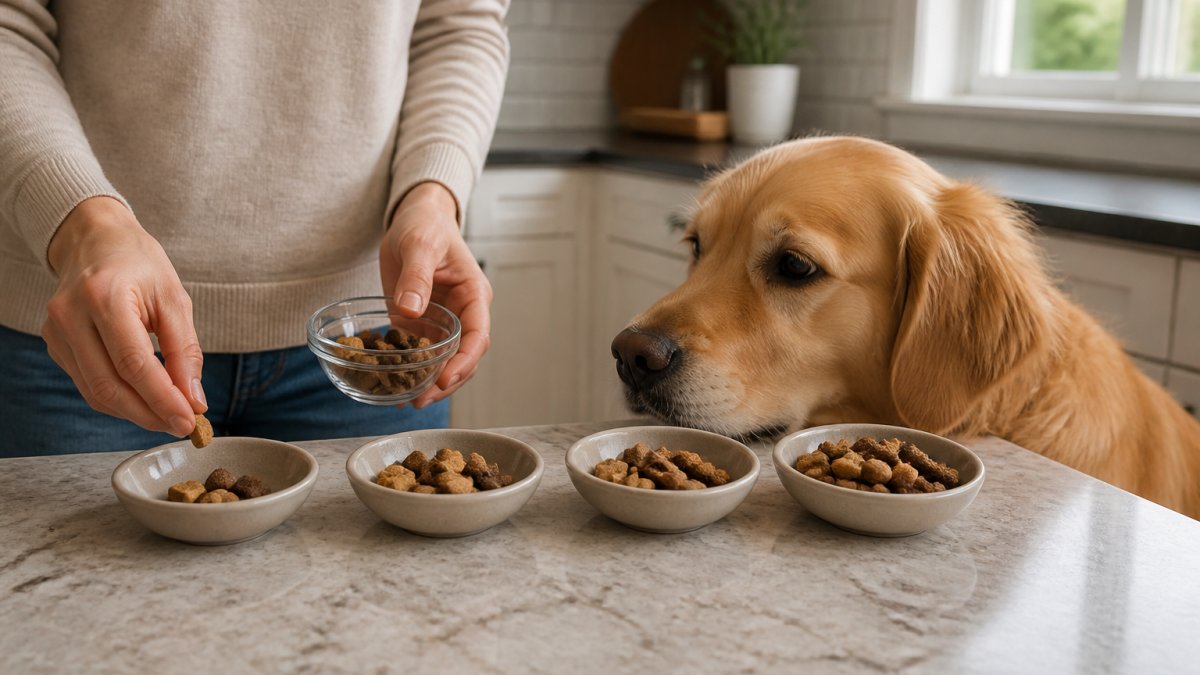
Most dogs handle a new treat in 7 to 10 days. The schedule below uses a simple mixing ratio, so you always know how much of each treat to give.
Days 1-3: Small Introductions
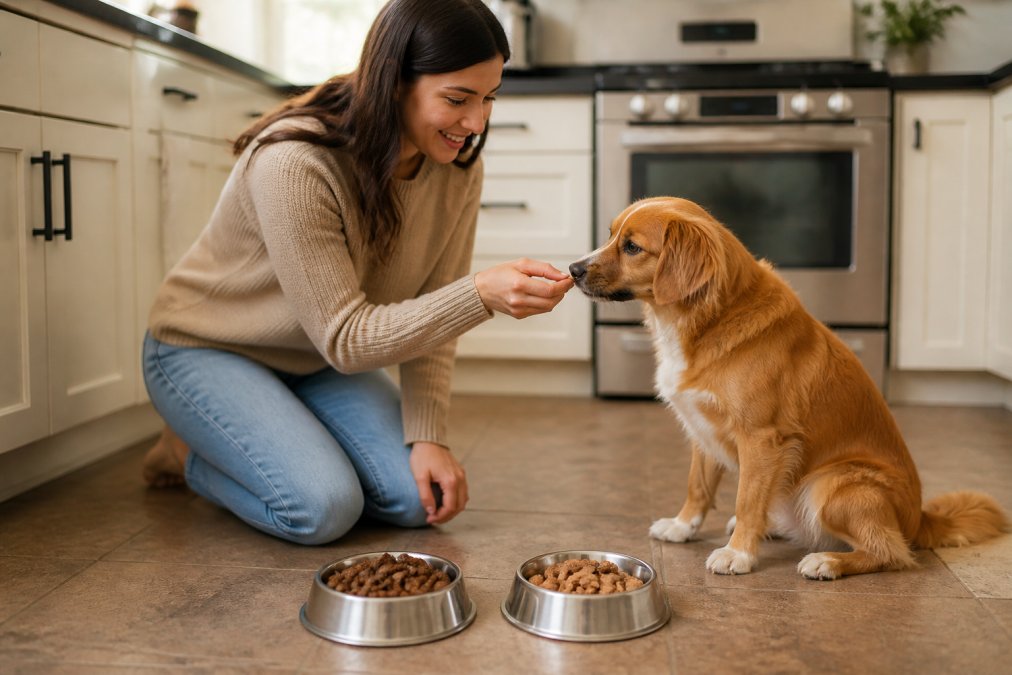
Start with mostly old treats and a little of the new. Give one small piece of the new treat per day, then fill the rest of the day’s treats with the old brand.
Watch for any change in appetite or stool.
Days 4-7: Building the Ratio
Now shift the mix to about half old and half new. This is the stage where a sensitive stomach may react, so keep portions small.
Use this mixing ratio as your guide:
| Stage | Old Treats | New Treats | Watch For |
|---|---|---|---|
| Days 1-3 | 75% | 25% | Appetite, gas |
| Days 4-7 | 50% | 50% | Stool quality |
| Days 8-10 | 25% | 75% | Energy, coat |
| Day 10+ | 0% | 100% | Normal routine |
Days 8-10: Full Switch
By now, most dogs eat the new treat with no issues. Move to 100% new treats and retire the old bag.
Signs of Dog Food Sensitivity to Watch For
Signs of dog food sensitivity usually show up within a few days of a change. The most common ones involve the gut and the skin.
Watch for these warning signs:
- Diarrhea or loose stools that last more than a day
- Vomiting after eating
- Excessive gas or bloating
- Itchy skin, paw licking, or hives
- Refusing food or a sudden drop in appetite
Never push through severe digestive upset to “get it over with.” Ongoing diarrhea can cause dehydration, especially in puppies and seniors.
How Many Treats Can a Dog Have a Day?
Treats should make up no more than about 10% of your dog’s daily calories. The rest comes from a complete, balanced meal.
- Small dogs: 1-3 small treats
- Medium dogs: 3-6 treats
- Large dogs: 6-9 treats
Best Dog Training Treats for a Smooth Transition
The best dog training treats for a transition are small, soft, and made with limited ingredients. Simple recipes are easier on sensitive stomachs and easier to break into training-sized pieces.
Look for these qualities:
- Limited, recognizable ingredients
- No wheat, corn, soy, beef, or chicken if your dog is sensitive
- Soft or breakable texture
- A real-food aroma that holds your dog’s attention
Transitioning Treats vs. Meals: What’s Different
Every top-ranking guide on switching dog food tells you to stretch the change over 7 to 10 days. That advice is built for meals, where the food supplies your dog’s core nutrition and a mistake has real consequences.
A treat-specific transition schedule
Use this instead of the meal-based 7-to-10-day table when treats are the only thing changing:
| Day | Old Treats | New Treats | What to Watch |
|---|---|---|---|
| 1 | 100% | 0% (offer one piece, not a full treat) | Interest, sniff test |
| 2-3 | 75% | 25% | Stool, willingness to work for it |
| 4-5 | 50% | 50% | Energy, coat, appetite at meals |
| 6-7 | 25% | 75% | Training responsiveness |
| 8+ | 0% | 100% | Normal routine |
Count treats for three days before you start. Most owners underestimate by half. Knowing the real number tells you whether you need a 3-day switch or a 10-day one.
The emergency switch
Sometimes you run out of the old treat with no warning. The bag is empty, the store is closed, and your dog is staring at you. In that case:
- Feed a smaller portion of the new treat than you normally would, half a piece instead of a whole one.
- Skip treats entirely for 24 hours if your dog has a known sensitive stomach, and use a piece of their regular kibble as the reward instead.
- Introduce the new treat one piece at a time over the next two days, watching stool each morning.
- If loose stool appears, pause the new treat and resume the old one if you can get it, or use boiled plain chicken as a bridge reward until things settle.
What to Do If Your Dog Refuses the New Treat
Refusal is the most common treat-transition problem, and it is also the most misread. Owners tend to assume the treat is bad or the dog is stubborn. Usually neither is true. Refusal has a cause, and the cause determines the fix.
Palatability hacks that actually work
These are ranked roughly from easiest to most involved. Try them in order.
- Warm it. A few seconds in the microwave, 3 to 5 seconds for a soft treat, 10 for a hard one, releases fat and protein aromas. Let it cool before offering. This is the single highest-success fix.
- Crumble it over the regular meal. Your dog associates the bowl with food. A crumbled new treat on top borrows that association.
- Pair it with a high-value activity. Offer the new treat right before a walk, a car ride, or a favorite game. The activity becomes the reward; the treat tags along.
- Sandwich it. Put a tiny piece of the new treat between two pieces of an old favorite. Your dog takes the whole bite and gets the new flavor by accident.
- Change the delivery. Some dogs refuse a treat from a hand but take the same treat tossed on the floor or hidden in a snuffle mat. Delivery matters as much as the treat.
- Try a different protein. If your dog refuses chicken, they may accept turkey, salmon, or peanut butter. Refusal is often flavor-specific, not brand-specific.
A dog that refuses a new treat for more than three days, with no other symptoms, is telling you something about preference. A dog that refuses food, treats, and water together is telling you something about health. Treat those two situations very differently.
When refusal is actually a symptom
Refusal becomes a medical concern when it comes with any of the following:

- Drooling, lip-smacking, or gulping shortly after eating
- Vomiting, even once
- Diarrhea or a stool change lasting more than 24 hours
- Lethargy, hiding, or a change in sleeping pattern
- Bad breath that is new or suddenly worse
- Pawing at the mouth or dropping food while eating
Frequently Asked Questions
Can switching dog treats cause diarrhea?
Yes. Sudden changes to any food or treat can trigger digestive upset, including diarrhea, vomiting, or loose stool. A treat’s fat content, protein source, or new ingredients can all disrupt a dog’s gut. That is why a gradual transition over 7-10 days works better than swapping bags overnight. If diarrhea lasts more than 24-48 hours or comes with lethargy or blood, contact your veterinarian.
How long should I take to introduce new dog treats?
Plan for 7-10 days. Start with one small piece of the new treat mixed with familiar treats on day one. By days 4-7, aim for a 50/50 mix. By days 8-10, most dogs can handle the new treat on its own. Dogs with sensitive stomachs may need 14 days. Watch stool quality and appetite throughout the transition period and slow down if anything changes.
What are the signs of a food sensitivity in dogs?
Watch for itching, paw licking, ear infections, vomiting, diarrhea, gas, or excessive scratching after eating a new treat. These signs of dog food sensitivity often appear within hours to a few days. A true food allergy is less common than a sensitivity and may cause hives or facial swelling. Stop the new treat and consult your veterinarian if symptoms persist or worsen.
How many treats can a dog have a day during a transition?
Treats should make up no more than 10% of your dog’s daily calories. For a 30-pound dog eating about 700 calories daily, that is roughly 70 calories of treats. During a transition, split that allowance between old and new treats. For training sessions, break treats into pea-sized pieces to stretch the count without overfeeding.
Switching treats shouldn’t be a guessing game. With a slow ratio, close watching, and the right snacks, most dogs sail through with a happy tummy. The Dog Emporium bakes all-natural, small-batch treats made with limited ingredients for sensitive stomachs, plus breakable options for seniors and small pups. Start shopping and give your dog a treat that’s gentle, tasty, and worth the wait.
Leave a Reply